 Vinyl Review
a-ha : Analogue : 2026
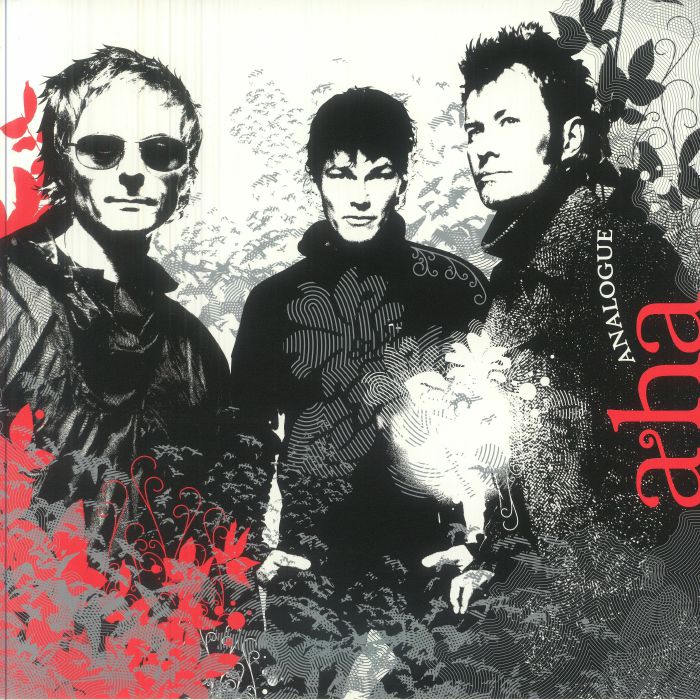
Rhino Records (2), Rhino Records (2)
2xLP, Album, RSD, Ltd, RE, 20t
Near Mint (NM or M-)
By 2005, a-ha had nothing left to prove and, on paper, not much reason to keep going. They’d already had their teen-idol moment with “Take On Me,” survived the awkward years of trying to be taken seriously as adults, and quietly kept making records that Norway loved and the rest of the world mostly ignored. Analogue is the sound of a band that has stopped performing the burden of its own legacy and started making the record it actually wanted to make. It’s also, not coincidentally, the record that dragged them back into the UK top ten for the first time since the 1980s — proof that ignoring your own hype can occasionally be the smartest commercial move available.
The album was the trio’s first for Polydor after decades with Warner, and the change of address seems to have loosened something. Most of it was produced by Martin Terefe and mixed by Flood, and that pairing gives Analogue a texture a-ha hadn’t really had before: warmer, less synth-forward, closer to adult alternative rock than synth-pop, with real drums and guitars doing a lot of the emotional work that used to belong to keyboards. It’s a mid-life record in the best sense — less interested in hooks for their own sake, more interested in mood, atmosphere, and the specific ache of being a person who has been doing this a long time.
It’s also, frankly, a little uneven — there’s a clear gap between the four or five songs that justify the album’s existence and the ones that feel like solid professional filler. But when it connects, it connects hard, and the singles alone made a real case that this band still had somewhere to go.
Track by track
1. Celice The opening track and lead European single, and a strange choice for either — moody, minor-key, and lyrically dark enough that it caused a genuine stir over its accompanying video. As a song it’s more interesting than immediate: a slow-building verse that never quite resolves into the chorus you expect, which is either a bold statement of intent for the album or a slightly frustrating way to start one, depending on your patience.
2. Don’t Do Me Any Favours A tighter, more conventional pop-rock song that functions as a palate cleanser after Celice’s murk. It’s pleasant and well-constructed without leaving much of an impression — the kind of track that works fine in the album’s flow but that you’d struggle to hum an hour later.
3. Cosy Prisons One of the record’s clear highlights and, deservedly, a single. Furuholmen’s writing here has real bite — a song about comfortable stagnation dressed up in a chorus big enough to make the discomfort go down easy. It’s the best example on the album of Terefe’s production style paying off: the arrangement breathes in a way a-ha’s older, more synth-dense material never did.
4. Analogue (All I Want) The title track and by far the album’s biggest hit, and it has an unusual backstory: it started life as a moodier, stranger song called “Minor Key Sonata,” which Max Martin was then brought in to rebuild into something radio could actually hold onto. You can hear the seam if you listen for it — there’s a slightly odd tension between the verses’ lingering weirdness and a chorus that’s been sanded down to pure hook — but the result works. It’s the song that put them back in the UK top ten for the first time since 1988, and it’s not hard to hear why: it’s the one moment on the record where a-ha’s old pop instincts and their new, moodier identity actually shake hands.
5. Birthright A single that never quite became a hit outside Norway, and on reflection that’s understandable — it’s a good song rather than a great one, mid-tempo and melodic in a way that plays it safer than the tracks around it. Solid, professional, a little forgettable.
6. Holy Ground This is where the album’s mood really deepens. Spacious and unhurried, it’s one of the tracks that most clearly signals a-ha isn’t chasing the dancefloor anymore — the arrangement give the vocal room to sit in silence between phrases, which is a very different instinct than the a-ha of the 1980s ever had.
7. Over the Treetops A quietly pretty song that leans into the album’s more pastoral, acoustic-adjacent side. It’s not a standout, but it’s a good example of how comfortable the band sound in this more organic register — nothing here strains for a hook it hasn’t earned.
8. Halfway Through the Tour By some distance the album’s longest and strangest inclusion, stretching well past the seven-minute mark in a tracklist otherwise built from tidy three-and-four-minute songs. It’s a patience-tester, more mood piece than song, and it’s the clearest evidence that whatever commercial instincts shaped the singles, somebody on this record was also allowed to just follow an idea until it ran out of road.
9. A Fine Blue Line A return to more direct songwriting after the sprawl of the previous track, though it doesn’t reach the highs of “Cosy Prisons” or the title track. Pleasant, competent, slightly anonymous — the album’s midsection has a handful of songs like this, doing their job without asking to be remembered.
10. Keeper of the Flame A better-than-average deep cut, with a chorus that has more lift than most of the surrounding material. It’s the kind of song that probably would have made a fine fifth single in a world where labels still released fifth singles.
11. Make It Soon The shortest track on the record and one of the more purely melodic ones — almost a relief after the heavier atmosphere of the previous few songs. It doesn’t overstay its welcome, which by this point in the tracklist is its own small virtue.
12. White Dwarf One of the more atmospheric, image-driven songs here, built around a title that’s doing a lot of work — burnt-out, compressed, still faintly glowing. It’s a good late-album mood piece, though by track twelve the record’s fondness for slow-building, room-filling arrangements has started to feel a little like a formula rather than a choice.
13. The Summers of Our Youth The closer, and a genuinely lovely way to end the record — Furuholmen takes the lead vocal (a rarity for the band) with Harket joining on the chorus, and the hand-off gives the song a warmth and vulnerability the rest of the album mostly keeps at arm’s length. It’s nostalgic without being cloying, and it sends the album out on its most emotionally direct note.
Overall
Analogue isn’t a lost classic, but it’s a genuinely good record from a band that had every incentive to just phone in a nostalgia lap and didn’t. The singles — “Cosy Prisons” and the title track especially — are as strong as anything in a-ha’s post-80s catalogue, and the album’s willingness to slow down, get moodier, and let songs breathe gives it a real identity distinct from the band’s earlier, glossier work. Where it falters is in its middle stretch, where competent songwriting occasionally substitutes for inspired songwriting, and in a couple of indulgent choices (that seven-minute track chief among them) that test how much goodwill you’re bringing in. But as a document of a band finding a second creative wind twenty years into their career, it’s a genuine success — and its commercial performance, dragging them back into the UK top ten after a seventeen-year absence, suggests plenty of listeners agreed.