 Vinyl Review
AC/DC : Back In Black : 2009
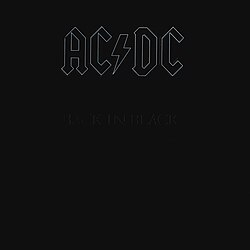
Columbia, Albert Productions, Sony Music
LP, Album, RE, RM
Mint (M)
Some albums need context. Back in Black doesn’t — it just needs volume. But the 2009 reissue, part of Sony/Columbia’s full-catalogue remaster campaign (mastered by the great George Marino), is worth talking about on its own terms, because it’s the version most people under 40 have actually heard: cleaner low end, more headroom, a little more air around Phil Rudd’s drums without sanding off any of the grime that makes this record work in the first place.
The circumstances of its creation remain one of rock’s great impossible stories. Bon Scott died in February 1980. By July, AC/DC had a new singer in Brian Johnson, a new album written and recorded, and — somehow — an absolute career-best on their hands, written as both a eulogy for Scott and a statement that the band wasn’t going anywhere. Producer Robert John “Mutt” Lange, who’d already sharpened the band’s sound on Highway to Hell, gets a huge amount of credit here: this is a heavier, more disciplined record than anything AC/DC made before it, without losing an ounce of the swagger.
What’s remarkable listening to it in 2009-remaster clarity is how little fat there is on this thing. Ten songs, no filler, no detours, every riff doing exactly one job and doing it perfectly. It’s an album that invented an entire subgenre of “just play the riff again, but bigger” songwriting and somehow never once feels formulaic while you’re inside it.
Track by track
1. Hell’s Bells The tolling bell, the thunderstorm, Johnson’s first words on his first AC/DC record being essentially a threat — it’s one of rock’s all-time great scene-setters, and the remaster gives that bell a genuinely physical low end it didn’t always have on older pressings. As an opening statement of intent it’s almost absurdly confident for a band that had just lost its frontman four months earlier.
2. Shoot to Thrill Where Hell’s Bells is ominous, this is pure adrenaline — a start-stop riff built for arenas, and Johnson’s vocal here is the first real proof that he could match Scott’s register without simply imitating him. It’s one of the record’s most-covered live staples for a reason.
3. What Do You Do for Money Honey The album’s most straightforwardly bluesy track, and a little underrated as a result — it doesn’t have a signature riff the way the singles do, but Angus Young’s soloing here is some of the most fluid on the record. A palate cleanser between two much bigger songs.
4. Given the Dog a Bone The most disposable song on the album, and even AC/DC’s biggest defenders tend to admit it. Solid mid-tempo rock, nothing more — the one place on the record where you can hear the difference between “great song” and “song that exists to keep the tempo up.”
5. Let Me Put My Love into You A slow-building, almost sleazy riff that takes its time getting where it’s going, which by this point in the tracklist is a smart pacing choice — it resets the energy just before the title track detonates. Johnson’s phrasing here is at its most Scott-indebted, in a good way.
6. Back in Black The title track and the record’s true center of gravity — one of the most recognizable riffs ever written, deployed with a patience that a lot of imitators never understood: it doesn’t rush to the vocal, it lets the riff be the whole point for a full sixteen bars first. As a tribute to Scott it’s oblique but unmistakable, and it’s aged into one of the great “the band survives” statements in rock history.
7. You Shook Me All Night Long The most purely pop song on the record, and the one that’s crossed furthest outside rock radio into weddings, movie trailers, and everywhere else a good time needs a soundtrack. It’s easy to take for granted precisely because it’s been absorbed into the culture so completely, but the hook-to-riff ratio here is genuinely close to perfect.
8. Have a Drink on Me A big, dumb, gleeful drinking song, and exactly as much fun as that description implies. It doesn’t aspire to be anything more than a great riff and a great excuse to yell along, and on an album this tightly constructed, that unpretentiousness is its own kind of relief.
9. Shake a Leg The most underrated deep cut here — faster and more frantic than most of the record, with one of Angus Young’s best extended solos. It tends to get overlooked between the two genuine all-timers on either side of it, but on its own merits it’s one of the album’s most purely exciting performances.
10. Rock and Roll Ain’t Noise Pollution A closer that sends the album out at full throttle rather than winding down, which is exactly the right call — this is a record that earns the right to end on a shout rather than a comedown. The title alone works as a mission statement for the whole album, and the band clearly knew it.
Overall
There’s a reason Back in Black is one of the best-selling albums ever made and still gets treated as a genre-defining text rather than a nostalgia act: it’s essentially airtight. Ten songs, virtually no weak links, a production job (doubly true of this remaster) that still sounds enormous decades later, and a circumstantial backstory — a band rebuilding itself from tragedy in real time — that somehow makes the music hit harder rather than feeling exploitative. It’s not a complicated record, and it doesn’t want to be. It just wants to be the loudest, most confident thing in the room, and forty-plus years on, it still mostly is.