 Vinyl Review
Aerosmith : Aerosmith : 1976
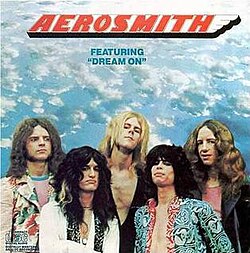
CBS, CBS
LP, Album, RE
Very Good Plus (VG+)
Every legendary band has to start somewhere unglamorous, and Aerosmith’s somewhere was a cheaply recorded, barely-promoted debut that Columbia Records more or less shrugged at on release. Joe Perry has said as much himself — no press, no push, no party. It took three years and a re-released single for the world to catch up to what was actually on this record, and in hindsight that delay looks less like a fluke and more like an industry failing to recognize a genuinely fully-formed band on its first try.
What’s striking about this album, listened to fresh, is how little “debut record” energy it actually has. This isn’t a band still finding its sound — Steven Tyler’s phrasing, Joe Perry’s guitar tone, the whole Stones-via-Boston-bar-band chemistry, it’s all already there. What it lacks is polish: the production (helmed by Adrian Barber, working fast and cheap at Intermedia in Boston) is raw in a way the band would never quite sound again once Jack Douglas took over on the next few records. That rawness is a feature as often as it’s a limitation — there’s a scrappiness here that the band’s slicker mid-70s output sometimes traded away.
Track by track
1. Make It An opening statement that’s basically a mission statement in song form — a band announcing, with more confidence than their commercial position at the time actually warranted, that they were going to make it. It’s a decent groove-forward opener, more about establishing attitude than delivering a knockout hook, and it does that job fine.
2. Somebody A tighter, punchier rock song that moves faster than the opener and shows off Tyler’s vocal range more directly. It’s a good example of the album’s scrappy charm — not a classic, but genuinely fun, propulsive bar-rock.
3. Dream On The song that eventually saved this album’s commercial life, and it’s not hard to hear why once it finally got the airplay it deserved. A slow-building piano ballad that swells into a genuinely enormous rock finish, it’s miles more ambitious than anything else on the record — proof that even this early, the band (and specifically Tyler as a songwriter) had real range beyond straight bar-band boogie. It’s aged into one of the most-quoted rock songs of its era for good reason.
4. One Way Street A long, loose blues-rock jam that leans hard on harmonica and a wandering structure. It’s the most “still figuring itself out” moment on the record — interesting as a showcase for the band’s chemistry, less essential as an actual song you’d reach for.
5. Mama Kin One of the album’s clear highlights and a song that’s stayed in the band’s live sets for decades since — a riff-driven strutter with horns woven through it that gives it more texture than most of the record’s other rockers. It’s the song here that sounds most like the Aerosmith the world would come to know.
6. Write Me a Letter Another blues-inflected track, notable as the first Aerosmith song to feature harmonica prominently. It starts with a drum-led intro before settling into a slow groove; it’s solid but a little slight compared to the record’s best moments.
7. Movin’ Out A grittier, more aggressive rocker that brings some welcome edge back after the slower midsection of the album. It’s not among the record’s most memorable songs, but it does useful work pacing-wise, picking the energy back up before the closer.
8. Walkin’ the Dog A cover of the Rufus Thomas R&B classic, and a fitting way to close things out — it wears the band’s blues and soul roots plainly, and Tyler sounds completely at home in it. As a closing statement it’s less about originality than about showing where all this music actually comes from.
Overall
This isn’t Aerosmith’s best album — that conversation belongs to Toys in the Attic or Rocks a couple of years later, once Jack Douglas had sharpened their sound into something more consistently explosive. But as a debut, it’s a genuinely strong document of a band that already knew who it was, just without the studio polish or commercial infrastructure to make the rest of the world notice yet. “Dream On” alone would be worth the price of admission, but “Mama Kin” and the loose, bluesy energy running through the rest of the record make a real case that this band was fully formed from day one — Columbia just didn’t know it yet.