 Vinyl Review
Andrew Lloyd Webber : Cats : 1981
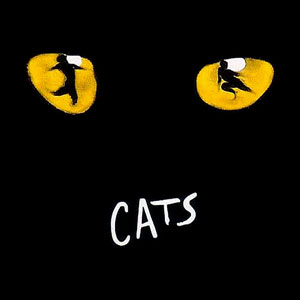
Polydor
2xLP
Very Good Plus (VG+)
By the time Cats opened at the New London Theatre in May 1981, Andrew Lloyd Webber had already had hits — but nothing quite prepared audiences for a show built almost entirely around T.S. Eliot’s Old Possum’s Book of Practical Cats, with barely a conventional plot to speak of. The original London cast recording, released the same year on Polydor as a lavish 2xLP set, is the document of that gamble paying off spectacularly: a show that would go on to run for 21 years in the West End and become one of the best-known musicals ever staged, built on a score that’s by turns playful, melancholic, and — in its most famous moment — genuinely devastating.
What comes through most clearly on this recording is how varied the score actually is. Lloyd Webber reaches for music hall pastiche, big-band swing, tango, and full orchestral sweep almost song to song, mirroring the show’s structure as a procession of character showcases rather than a linear story. The original London cast — led by Elaine Paige as Grizabella, alongside Brian Blessed, Paul Nicholas, Wayne Sleep, and a large ensemble — gives the recording a real theatrical energy that studio-only cast albums sometimes lack; you can practically feel the choreography happening around the songs.
Track by track
1. Overture / Prologue: Jellicle Songs for Jellicle Cats The recording opens with an orchestral overture that samples several of the score’s key melodies before launching into the ensemble number that establishes the show’s whole conceit — cats gathering for the Jellicle Ball. It’s a strong, theatrical way to open, immediately signaling that this is going to be more spectacle than storyline.
2. The Naming of Cats A quirky, almost recitative-style number lifted nearly verbatim from Eliot’s original poem, setting the tone for how faithfully the show treats its source material. It’s less a “song” in the conventional sense than a piece of connective tissue, but it’s charming in its own odd way.
3. The Invitation to the Jellicle Ball A brief, energetic ensemble piece that keeps the momentum of the opening sequence going, functioning mostly as a bridge into the character introductions that follow.
4. The Old Gumbie Cat The first real character showcase, introducing Jennyanydots in a music-hall-flavored number full of tap-dancing energy (on stage, at least — on record it’s mostly conveyed through the orchestration’s bounce). A fun, lighter moment early in the score.
5. The Rum Tum Tugger One of the score’s most purely entertaining numbers — a strutting, rock-and-roll-inflected showcase that gives the recording a jolt of attitude very different from the whimsy around it. It’s one of the songs that translates best outside the context of the show itself.
6. Grizabella: The Glamour Cat A tonal shift into genuine pathos — the first real glimpse of the character whose arc will anchor the show’s emotional climax. Even in this introductory form, there’s a weight to the writing here that sets up everything “Memory” will later pay off.
7. Bustopher Jones: The Cat About Town A comic character number, lighter and more purely playful than the songs surrounding it — a well-fed, self-satisfied cat given a jaunty, almost vaudevillian tune. It’s minor in the show’s larger arc but pleasant on its own terms.
8. Mungojerrie and Rumpleteazer A cheeky, music-hall duet about a pair of mischievous cats, full of rhythmic wordplay that leans hard into Eliot’s original verse. It’s one of the score’s most purely fun numbers, propulsive and cheerfully unserious.
9. Old Deuteronomy A grander, more ceremonial number introducing the show’s patriarchal figure — slower and more reverent than most of what’s come before, and a useful tonal counterweight heading into the Jellicle Ball sequence.
10. The Jellicle Ball An extended, largely instrumental dance sequence that represents the score at its most ambitious structurally — long, shifting through multiple musical ideas, clearly built to support elaborate choreography rather than to stand alone as a song. On record it’s more about atmosphere and momentum than melody.
11. Memory (Grizabella) The song the entire show is built around, and deservedly so — even heard outside its dramatic context, this is one of the most effective torch songs of the era, all aching restraint building to a full-throated climax. Paige’s performance here is the recording’s clear centerpiece, and it’s easy to hear why this song became a hit entirely independent of the musical that spawned it.
12. The Moments of Happiness A gentler, more reflective number that opens the show’s second half, offering a moment of calm before the character parade resumes. It’s understated compared to the score’s bigger set pieces, functioning mostly as connective mood-setting.
13. Gus: The Theatre Cat A poignant, nostalgic character piece about a once-great performer now in decline — thematically it rhymes with Grizabella’s arc, and it’s one of the score’s more genuinely touching character studies outside the “Memory” storyline.
14. Growltiger’s Last Stand An extended comic set piece with a mock-operatic, faux-Venetian flavor — a real departure in style from the rest of the score, and one of the show’s more theatrically ambitious numbers, even if it’s less musically memorable than the score’s best-known songs.
15. Skimbleshanks: The Railway Cat A rhythmic, chugging number that mimics a train’s motion in its orchestration — clever and purely fun, one of the score’s most purely enjoyable character showcases and a favorite among longtime fans of the show.
16. Macavity: The Mystery Cat A slinky, jazzy number built around one of Eliot’s most famous creations — a criminal mastermind cat who’s never quite caught. The arrangement leans into a noir-ish, sultry groove that stands apart from the score’s more theatrical numbers.
17. Mr. Mistoffelees A bright, propulsive showcase for the show’s magician cat, full of orchestral flourishes that mimic stage magic tricks. It’s one of the score’s most purely entertaining numbers and a highlight of the show’s second act.
18. Memory (Reprise) The song’s full, climactic reprise, delivering the emotional payoff the show has been building toward across two acts — Grizabella’s redemption and ascension rendered in the score’s most unabashedly big, emotional moment. It’s the recording’s true peak, and it’s not hard to understand why audiences left the theater humming this one melody above all others.
19. The Journey to the Heaviside Layer A grand, ceremonial finale sequence, mystical and orchestrally lush, that closes out the show’s central narrative thread with real theatrical sweep.
20. The Ad-dressing of Cats The show’s closing number, breaking the fourth wall to address the audience directly (as Eliot’s original poems often do), sending the recording out on a warm, slightly whimsical note rather than a big emotional crescendo — a fitting way to close a show that’s spent two acts oscillating between spectacle and sentiment.
Overall
The original London cast recording of Cats is a fascinating listen precisely because of how strange its premise sounds on paper and how completely it commits to that strangeness — this is a nearly plotless revue of character songs about cats, and it works because Lloyd Webber’s score is genuinely varied and often gorgeous, and because the cast (Elaine Paige above all) sells every register the material asks of them. “Memory” alone would justify the record’s place in musical theatre history, but the surrounding score holds up far better than its reputation as a novelty might suggest — this is ambitious, eclectic theatrical songwriting, delivered by a cast clearly having a great time inside a genuinely bizarre and beloved show.