 Vinyl Review
Blondie : Parallel Lines : 1978
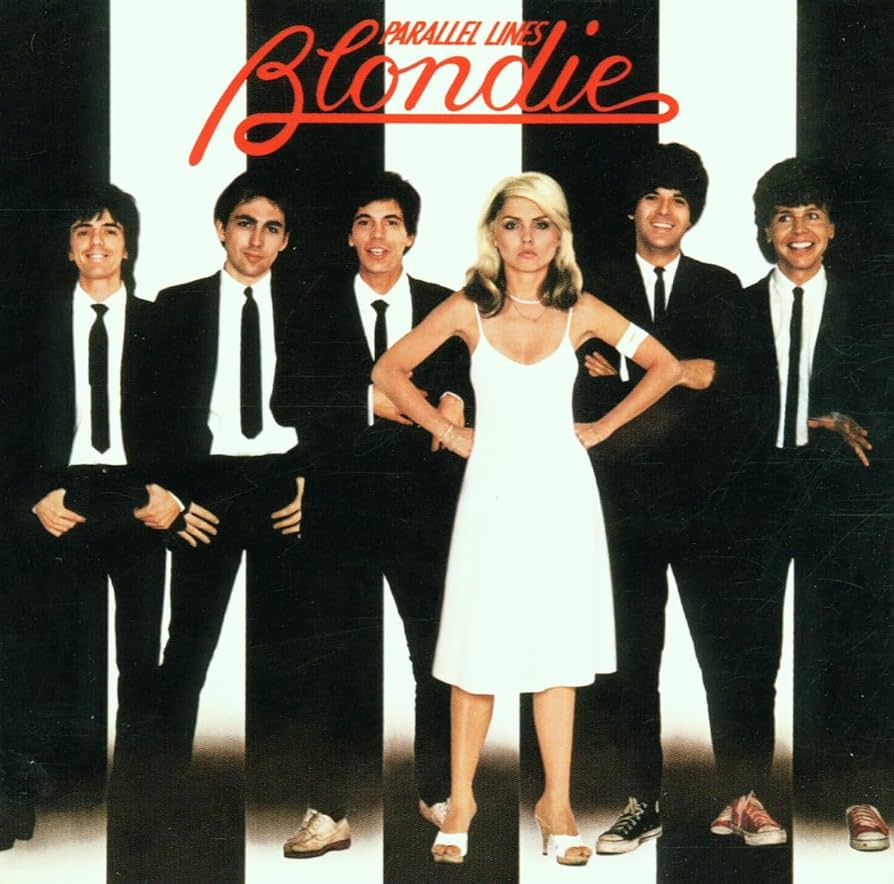
Label: Chrysalis Records (CHR 1192) Format: LP Released: September 8, 1978 Recorded: June–July 1978, Record Plant, New York City Producer: Mike Chapman
Overview
Parallel Lines is the record where Blondie stopped being a promising CBGB-scene curiosity and became, briefly, the biggest band in the world. Their first two albums had the scrappy charm of the New York punk and new wave underground they came out of, but neither one hinted at just how sharp a pure pop songwriting machine this band could be once someone forced the issue. That someone was Mike Chapman, the Australian hitmaker Chrysalis brought in against Debbie Harry’s initial wishes, and by all accounts the sessions were a battle — Chapman has described the band as some of the least technically proficient musicians he ever worked with, and bassist Nigel Harrison reportedly once threw a synthesizer at him out of sheer frustration with his perfectionism. Whatever the cost, it worked: Chapman rebuilt the band’s sound from the drums up, tightened every performance, and helped turn a set of songs that were still being finished in the vocal booth into one of the most note-perfect pop records of the decade.
The album is often filed under punk or new wave because of where the band came from, but it barely sounds like either — it’s disco, girl-group pop, power pop, and straight-up rock and roll, filtered through Harry’s cool, funny, faintly dangerous persona. It shot to No. 1 in the UK (staying charted for over two years) and turned the band into full-blown stars in the US on the strength of “Heart of Glass” alone. Nearly fifty years on, it’s lost none of its snap, and its 2024 induction into the Library of Congress’s National Recording Registry only confirmed what critics said at the time: this is one of the great, front-to-back-listenable pop albums of its era.
Track by Track
Side One
- Hanging on the Telephone — A cover of a song originally by the power-pop band the Nerves, and a nearly perfect opener: urgent, breathless, and over in under two and a half minutes. Harry’s vocal reads like someone dialing a phone with genuine desperation, and the song sets the album’s template immediately — turn teenage longing into something that sounds thrillingly modern.
- One Way or Another — Menacing and stalker-ish in a way the band deliberately played for dark humor (Harry has said it was inspired by an early real-life stalking experience, reframed with a wink), built on one of the most instantly recognizable bass-and-guitar riffs of the era.
- Picture This — Wistful and gorgeous, with a lyric Chapman suspected was Harry writing about her relationship with guitarist Chris Stein. One of the record’s most purely melodic moments, and an early sign of how far the band’s songwriting had come.
- Fade Away and Radiate — A hazy, hypnotic detour into something closer to art-rock, featuring a guest guitar solo from King Crimson’s Robert Fripp. The line about old TV broadcasts dying “in 1955” has been singled out by critics as one of the best lyrics the band ever wrote.
- Pretty Baby — A bright, driving pop song that keeps the energy up after the eerier “Fade Away and Radiate”; unfussy and catchy without being a major single.
- I Know But I Don’t Know — The album’s one true oddity: a co-lead vocal from guitarist Frank Infante rather than Harry, giving side one a rawer, more straightforwardly rock-and-roll closer.
Side Two
- 11:59 — Jimmy Destri’s synth-driven contribution, tense and nervy in a way that nods to the band’s new wave roots more than almost anything else on the record.
- Will Anything Happen? — A tightly wound, driving rock song (written by Chapman’s former songwriting partner Nicky Chinn under the pen name “Lee”) that keeps the album’s momentum going into its back stretch.
- Sunday Girl — A featherlight, almost bubblegum-pop confection written by Chris Stein, reportedly about Harry’s runaway cat. Deceptively simple, endlessly hummable, and a UK No. 1 single in its own right.
- Heart of Glass — The album’s undisputed centerpiece and the song that changed everything for the band: a disco-inflected departure built on a hypnotic, machine-like rhythm (Clem Burke chasing the “Saturday Night Fever” groove) and one of Harry’s most seductive vocal performances. It became Blondie’s first US No. 1 and, for many listeners, the definitive Blondie song.
- I’m Gonna Love You Too — A brisk, joyful cover of the Buddy Holly/Crickets song, all handclaps and momentum; a fun, energetic palate cleanser after the cool restraint of “Heart of Glass.”
- Just Go Away — A defiant, kiss-off closer that sends the album out with a bit of snarl, a reminder that under all the pop gloss, this was still a band that came up through New York’s punk clubs.
The Vinyl Itself: Pressing & Sound Quality
Parallel Lines was mastered at MCA-Whitney Studio in Glendale, California by Steve Hall, and the original 1978 Chrysalis pressing (catalog number CHR 1192) is generally well-regarded among collectors — clean, dynamic, and true to the crisp, punchy production Chapman and engineer Pete Coleman built in the studio. As with most major-label pressings of the era, quality varied somewhat by pressing plant and territory (contemporary US, UK, Canadian, and Japanese pressings all circulated, with the Japanese Toshiba EMI pressing in particular prized by collectors for its clarity), but none of these are considered problem pressings in the way some other reissues can be.
The one genuinely notable wrinkle for collectors is “Heart of Glass” itself: the original album version, running around 3:54, appeared on early pressings, but from March 1979 onward — after the song’s single success — Chrysalis swapped in the longer “disco” mix, around 5:50, on subsequent pressings of the album. This means the actual running time and edit of “Heart of Glass” you get depends on which pressing you own, something worth checking if you’re hunting for the original mix specifically.
Later reissues expanded the picture further: a 2001 remaster added bonus tracks (an early version of “Once I Had a Love,” a live T. Rex cover, and two live cuts), and a 2008 30th Anniversary Edition brought new artwork, additional bonus material, and a DVD, though these were CD-focused releases rather than new vinyl pressings. Anyone shopping for vinyl today will mostly be choosing between an original late-’70s pressing (in whichever national variant they can find) and more recent 180g reissues from Rhino/Chrysalis’s ongoing reissue programs, both of which are generally solid, straightforward listens rather than audiophile prestige objects.
Final Verdict
Parallel Lines is about as close to a flawless pop album as the late ’70s produced — a record where the deep cuts (“Fade Away and Radiate,” “I Know But I Don’t Know,” “Just Go Away”) are nearly as good as the four stone-cold classics that made it a phenomenon (“Hanging on the Telephone,” “One Way or Another,” “Sunday Girl,” and “Heart of Glass”). It captures a specific, unrepeatable moment: a band from the CBGB scene fully embracing pop songcraft without losing its edge, guided by a producer who was, by his own account, borderline tyrannical about getting there. Whatever the cost in the studio, the results speak for themselves — this is a genuine masterpiece, and deservedly one of the most enduring albums of its decade.
Highlights: “Hanging on the Telephone,” “One Way or Another,” “Picture This,” “Sunday Girl,” “Heart of Glass,” “Fade Away and Radiate”