 Vinyl Review
Bob Marley & The Wailers : Legend – The Best Of Bob Marley And The Wailers : 2015
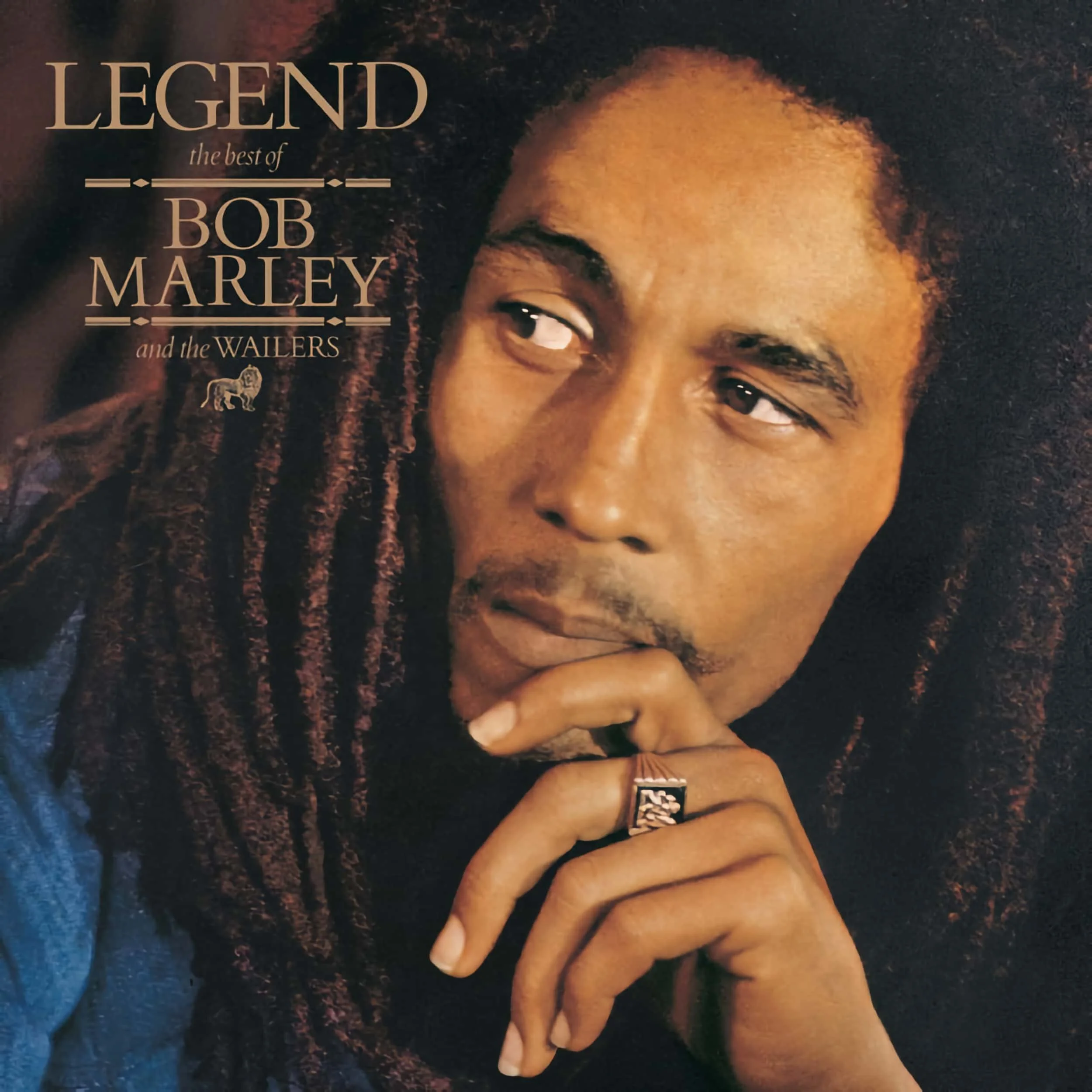
Label: Tuff Gong / Island Records (Back to Black series) Format: LP, 180 gram Released: 2015 (originally released 1984) Pressed by: MPO
Overview
Legend has been the default entry point into Bob Marley’s catalog for over forty years, and for good reason: released three years after his death, it distills nine studio albums’ worth of material into fourteen songs that manage to be both a genuinely great listening experience and one of the best-selling reggae — and best-selling greatest-hits — albums of all time. This 2015 pressing arrived as part of Universal/Island’s ongoing “Back to Black” vinyl reissue series, which has steadily returned classic catalog titles to wax on 180-gram vinyl; it landed the same year the series was also putting out reissues of albums like Amy Winehouse’s Back to Black itself, and slots into the broader mid-2010s vinyl revival rather than marking any particular Marley anniversary.
It’s worth being upfront about what Legend is and isn’t, the same critical conversation that’s followed it for decades: it leans heavily on Marley’s later, more polished, pop-and-reggae-crossover period (much of Exodus, Kaya, and Uprising), and gives comparatively little space to the harder-edged, more overtly political early Wailers records with Peter Tosh and Bunny Wailer. That’s a real limitation for anyone wanting the full picture of the band’s evolution — but taken purely as a listening experience, the song selection here is nearly untouchable. This isn’t a scattershot hits package; it plays like a genuinely sequenced, front-to-back album, which is a big part of why it has endured as long as it has.
Track by Track
Side One
- Is This Love (from Kaya, 1978) — A warm, easygoing opener built on one of Marley’s most purely romantic melodies; it eases the listener in gently before the record’s heavier material arrives.
- No Woman, No Cry (live version, originally from Natty Dread, 1974) — Legend uses the famous 1975 live recording (from the Live! album) rather than the studio original, and it’s the right call: the extended, gospel-like piano intro and the crowd’s swelling reaction turn an already beautiful song into a genuine communal moment.
- Could You Be Loved (from Uprising, 1980) — Disco-inflected and instantly danceable, this is Marley at his most outward-facing and pop-savvy, without losing any of his warmth.
- Three Little Birds (from Exodus, 1977) — Possibly the most universally beloved song in the catalog: simple, sunny, endlessly reassuring, and one of the most recognizable reggae songs ever recorded.
- Buffalo Soldier (from Confrontation, 1983, released posthumously) — A history lesson disguised as a singalong, tracing Black soldiers’ role in America’s westward expansion; one of Marley’s most historically pointed lyrics wrapped in one of his catchiest melodies.
- Get Up, Stand Up (from Burnin’, 1973) — Co-written with Peter Tosh, and the album’s clearest statement of political defiance; a reminder that under the polish of the later hits, this was music built on real conviction.
- Stir It Up (from Catch a Fire, 1973) — A loose, sensual groove that closes side one on a warmer, more intimate note after the militancy of “Get Up, Stand Up.”
Side Two
- One Love / People Get Ready (from Exodus, 1977) — A medley built around a Curtis Mayfield interpolation, and one of Marley’s most direct statements of unity; still used as something close to an unofficial reggae anthem.
- I Shot the Sheriff (from Burnin’, 1973) — A tense, morally ambiguous narrative that became one of the band’s most famous songs (helped enormously by Eric Clapton’s hit cover), built on one of Marley’s most memorable vocal melodies.
- Waiting in Vain (from Exodus, 1977) — A patient, aching love song, all longing and restraint; one of the record’s most purely melodic moments.
- Redemption Song (from Uprising, 1980) — A stark, solo acoustic performance that stands apart from everything else on the record; widely regarded as Marley’s most personal and profound song, written as his health was failing.
- Satisfy My Soul (from Kaya, 1978) — A buoyant, playful groove that lightens the mood after the weight of “Redemption Song.”
- Exodus (from Exodus, 1977) — A hypnotic, percussion-driven march that builds and builds; one of the most propulsive grooves in the catalog and a genuine highlight of the record’s back stretch.
- Jamming (from Exodus, 1977) — A joyful, loose-limbed closer that sends the album out on pure good feeling — a fitting final note for a record built around warmth and resilience.
The Vinyl Itself: Pressing & Sound Quality
This is where the 2015 Back to Black pressing gets genuinely contentious. Pressed by MPO, this edition has an unusually wide spread of listener experiences: some collectors report a clean, dynamic, perfectly enjoyable pressing, but a significant number of others describe persistent issues — unusually low playback volume that requires cranking the amp well past normal levels, audible surface noise and crackle that becomes more noticeable at those higher volumes, and in some copies a low-frequency rumble running under the music. Complaints along these lines have been common enough, and consistent enough across multiple pressing runs, that they’re clearly not just one-off bad copies; more than one buyer has recommended sticking with the CD or streaming version instead if sound quality is the priority.
It’s not uniformly bad — plenty of reviewers report copies that sound rich and full, with good stereo separation and satisfying low end, and the album’s average rating on the collector market remains high, reflecting how beloved the record is regardless of pressing quirks. But going in, it’s fair to set expectations at “solid if you get a good copy, disappointing if you don’t,” rather than assuming a guaranteed audiophile experience just because it’s a 180-gram reissue. If sound quality specifically matters to you, it may be worth comparing this Back to Black pressing against Bob Marley’s later Abbey Road half-speed remastered edition (part of a 2020 reissue campaign covering the whole catalog), which has been much more consistently praised for its clarity, bass, and overall dynamics, albeit as a different mastering and pressing entirely.
Final Verdict
As a piece of music, Legend remains close to unimpeachable — a nearly perfect sequence of songs that functions as both an introduction to Bob Marley for the uninitiated and a deeply satisfying listen for people who already know every word. The absence of the earlier, rougher-edged Wailers material is a legitimate criticism for listeners chasing the full arc of the band’s career, but it doesn’t diminish what’s actually here, which is fourteen songs of remarkable warmth, conviction, and craft. The 2015 vinyl pressing itself is the wobblier part of the equation: a “Back to Black” reissue that clearly meant well but shipped with real, well-documented consistency issues, making this more of a “buy from a seller with a good return policy” recommendation than an unconditional one. The music deserves five stars; this particular pressing earns a more qualified recommendation.
Highlights: “No Woman, No Cry” (live), “Three Little Birds,” “Redemption Song,” “Jamming,” “Exodus,” “Could You Be Loved”