 Vinyl Review
Boston : Boston : 1976
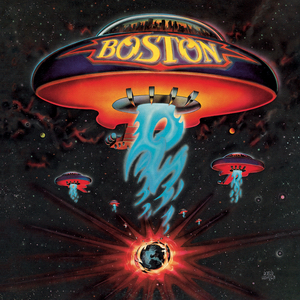
Label: Epic Records (PE 34188) Format: LP Released: August 25, 1976 Recorded: October 1975 – April 1976, primarily at Tom Scholz’s home studio (Foxglove, Watertown, MA), with additional work at Capitol Studios (Hollywood) and the Record Plant (Los Angeles) Producers: John Boylan, Tom Scholz
Overview
Few debut albums have arrived as fully formed, or gone on to sell quite as absurdly well, as Boston. Guitarist Tom Scholz — an MIT-trained engineer working a day job at Polaroid — spent years perfecting these songs alone in his basement studio, layering guitar parts with an almost obsessive attention to tone and arrangement. When Epic Records insisted the album be recorded professionally in Los Angeles, Scholz and producer John Boylan famously staged a deception: a small amount of work was done on the West Coast to satisfy the label, while the vast majority of the actual album was quietly rebuilt from Scholz’s original home demos back in Massachusetts. The result is one of the strangest success stories in rock history — a record built essentially by one obsessive engineer in his basement that went on to become one of the best-selling debut albums of all time (Diamond-certified in the US), and one of the most influential-sounding rock records of the decade.
Musically, Boston fuses the melodic hooks of British Invasion bands like the Kinks and the Yardbirds with a thick, multi-tracked guitar sound Scholz developed almost entirely through his own custom electronics — the album essentially invented a whole subgenre of polished, guitar-orchestrated arena rock that would come to be called (sometimes as an insult) “corporate rock.” Vocalist Brad Delp’s soaring tenor gives the whole thing an emotional lift that keeps it from ever feeling clinical, despite how meticulously engineered it is underneath. Fifty years on, the album still sounds enormous, and virtually every song on it remains a classic rock radio staple.
Track by Track
Side One
- More Than a Feeling — The song that started it all: a soft, acoustic-guitar intro that explodes into one of the most recognizable guitar riffs and choruses in rock history. Scholz reportedly spent five years perfecting the track before the band ever got signed, and it shows — every element, from the layered harmonies to the guitar tone, feels engineered to perfection without losing its emotional pull.
- Peace of Mind — A propulsive, melodic rocker about resisting the pressure to chase money and status; Delp’s vocal performance and the song’s soaring chorus make it one of the album’s most underrated tracks relative to its singles-chart profile.
- Foreplay/Long Time — A two-part suite: “Foreplay” is a driving instrumental showcase for Scholz’s Hammond organ work, which then launches into “Long Time,” a full-throttle rock song with one of the album’s most anthemic choruses. Together they form nearly eight minutes of the record’s most structurally ambitious material.
- Rock & Roll Band — A loose, autobiographical account of the band’s own scrappy early years playing bars and clubs; tighter and rawer than the songs around it, and a nice grounding moment amid the album’s more polished, orchestrated tracks.
Side Two
- Smokin’ — A boogie-rock burner built around a driving keyboard riff and one of the album’s most purely fun, energetic performances; originally the B-side to “More Than a Feeling,” but a highlight in its own right.
- Hitch a Ride — Moody and dynamic, alternating between a gentle, atmospheric verse and a big, guitar-driven chorus; one of the album’s most texturally interesting tracks.
- Something About You — A tight, hook-driven rocker that keeps the album’s momentum going into its final stretch, without quite the ambition of the record’s biggest singles.
- Let Me Take You Home Tonight — A warm, melodic closer that sends the album out on an unexpectedly gentle, romantic note after so much guitar firepower — a good demonstration of the band’s range beyond pure arena-rock bombast.
The Vinyl Itself: Pressing & Sound Quality
Boston has one of the most heavily discussed pressing histories in classic rock collecting, and the consensus among longtime collectors is unusually clear: original 1976 pressings, particularly those mastered by Wally Traugott at Capitol (identifiable by “Wly” in the runout deadwax) or by Allen Zentz (“AZ” in the runout), are widely regarded as the best-sounding versions of this album on any format. These early orange-label Epic pressings are prized for their tonal balance, clean vocal presence, and overall fidelity to how the record was actually mixed and intended to sound in 1976. A well-regarded Japanese pressing from the era is also frequently cited by collectors as an especially clean, detailed alternative, sometimes even preferred over the domestic Wally cuts.
By contrast, later reissues have a mixed reputation. A 2010s-era US reissue in particular has been criticized by collectors for adding noticeably more bass than the original mix ever had, which some listeners feel muddies detail rather than improving the sound — a common issue with reissues remastered to match more modern, bass-heavy sonic trends rather than staying faithful to the source. As with many mid-’70s major-label records, quality can also vary between individual pressing plants (Terre Haute and Santa Maria pressings both circulated, sometimes even hybridized on the same release), so condition and specific plant matter as much as edition here. The general buying advice from serious collectors: look for the orange-label original with the recognizable mastering engineer signatures in the deadwax, and treat later remasters with some caution unless you’ve heard direct comparisons you trust.
Final Verdict
Boston remains a genuine landmark: a nearly perfect distillation of mid-’70s arena rock ambition, built with an obsessiveness that rewards repeat listening even fifty years later. Every song on side one is a classic rock staple in its own right, and even the deeper cuts on side two hold up as strong, well-crafted rock songs rather than filler. It’s an album that essentially set the template for a whole era of guitar-driven, studio-perfected rock, for better or worse, and its influence is hard to overstate. For anyone chasing this on vinyl, the message from collectors is consistent: track down a clean original pressing if sound quality matters to you, and don’t assume a shinier modern reissue is automatically the better listen.
Highlights: “More Than a Feeling,” “Peace of Mind,” “Foreplay/Long Time,” “Rock & Roll Band,” “Smokin'”