 Vinyl Review
Deep Purple : Splat! : 2026
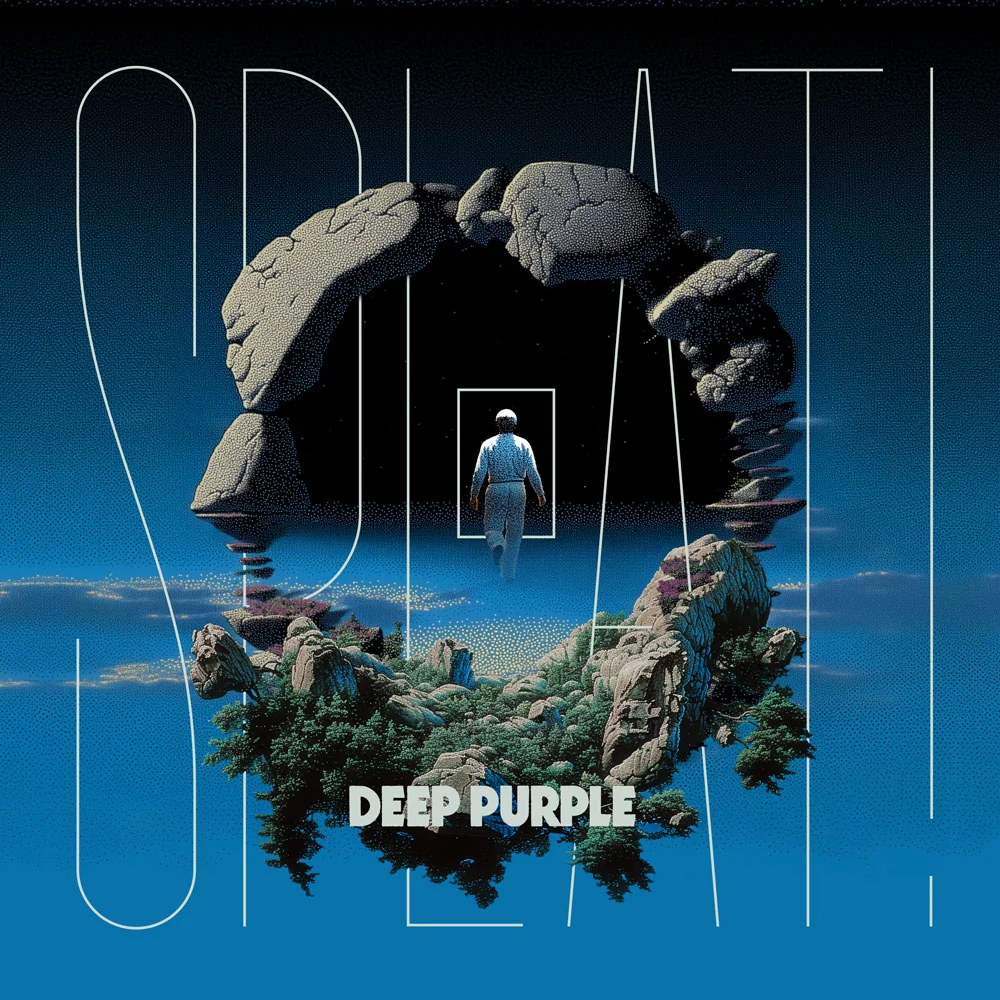
Label: earMUSIC Format: 2LP, 45 RPM Released: July 3, 2026 Recorded: Nashville (with additional sessions using Keith Urban’s studio) Producer: Bob Ezrin
Overview
Splat! is Deep Purple’s 24th studio album, their second with guitarist Simon McBride (who stepped in for Steve Morse’s 28-year tenure on 2024’s =1), and their sixth consecutive collaboration with producer Bob Ezrin, a streak dating back to 2013’s Now What?!. Conceived around an idea from vocalist Ian Gillan, the album frames the end of humanity not as apocalyptic destruction but as a kind of transformation — “a metamorphosis beyond physical existence,” in the band’s own words — though in practice the record wears that concept lightly, functioning more as a mood than a literal narrative arc. Billed by the band as “the heaviest Deep Purple album in many years,” it was tracked with the band playing together in the room, in keeping with how Deep Purple has always recorded.
At 80, 80, and 78 years old respectively, Ian Gillan, bassist Roger Glover, and keyboardist Don Airey (alongside 70-year-old drummer Ian Paice) show remarkably little sign of slowing down here, and critical reaction has been some of the warmest the band has received this century — outlets have called it their best album of the millennium and a genuine return to the interplay-heavy, keyboard-and-guitar-driven sound of the classic Mark II era (Machine Head, Fireball, In Rock), filtered through McBride’s fresh energy and Ezrin’s polish. Reviewers have consistently singled out the McBride/Airey instrumental interplay as the record’s most virtuosic element, with Gillan’s wit and storytelling intact even as his top-end range has softened with age.
Track by Track
Side A
- Arrogant Boy — A fast, riff-packed opener explicitly compared by critics to classics like “Highway Star” and “Fireball,” telling the story of a defiant, semi-literate malcontent named Billy; a genuinely thrilling statement of intent that critics have singled out as one of the record’s best openers in years.
- Diablo — A mid-paced, swinging groove with a floating, tongue-in-cheek Gillan vocal melody and a strong instrumental exchange between Airey and McBride; a grower that reviewers say improves considerably with repeat listens.
- The Rider — A vivid, lyric-forward track that, while lacking one single knockout moment, functions as an effective, atmospheric transition into the album’s more eccentric second half.
- The Lunatic — A dark, brooding, faintly psychedelic and Eastern-tinged track built on a suspenseful organ-and-guitar riff, capped by a genuine McBride/Airey instrumental duel; widely cited by reviewers as one of the album’s standout “instant classics.”
Side B
- The Only Horse in Town — Opens with a commanding Don Airey Hammond organ statement before blossoming into an upbeat, riff-driven rocker; one of the record’s clearest showcases for Airey’s playing.
- Sacred Land — A Celtic-flavored, shuffling track that multiple reviewers single out as an “instant classic,” built on interesting keyboard textures before Ian Paice’s thumping beat kicks the song into gear.
- The Beating of Wings — A bluesy, soulful, reflective detour that isn’t quite a ballad but provides a welcome change of pace and mood amid the record’s harder-hitting tracks.
Side C
- Guilt Trippin’ — The album’s third single and a genuine prog workout, giving Gillan’s surreal, observational storytelling real room to stretch, with the interplay between McBride and Airey again cited as a highlight.
- Scriblin’ Gib’rish — A hard, fast-charging riff track built around synthesizer textures and pointed commentary on modern slang and empty chatter — effective, if reviewers generally rank it as slightly less memorable than the surrounding tracks.
- Jessica’s Bra — One of the record’s catchiest and most divisively-titled songs, its lyric wasting no time explaining the joke (a misspelled pub sign); Gillan delivers one of his signature screams late in the track, a genuine surprise from an 80-year-old singer and a moment multiple reviews single out as proof his voice hasn’t diminished.
Side D
- Third Call — Opens on near-prog organ before settling into a slow, cool classic-rock groove; widely praised as featuring some of McBride’s best guitar work on the record, with Glover and Paice’s rhythm section given unusual prominence.
- My New Movie — A propulsive, 1970s-indebted rocker built on tight keyboard-and-guitar interplay, feeling like classic-era Purple with a modern edge.
- Splat! — The title track and closer, built on a spooky, descending chord progression reviewers have compared to the Beatles’ “Dear Prudence,” capped by a Stevie Wonder-esque clavinet solo from Don Airey — an unexpectedly atmospheric, theme-tune-like way to end an otherwise hard-charging record.
The Vinyl Itself: Pressing & Sound Quality
This is a genuinely divisive pressing, and the divide runs less along “good copy vs. bad copy” lines than along a real difference of opinion about the mastering itself. On the positive side, the album was released as a 2LP set cut at 45 RPM — a format choice generally associated with improved fidelity — and several outlets and collectors have praised the result: one publication described testing the vinyl thoroughly and finding it “mixed and mastered to absolute sonic perfection,” while a Discogs reviewer of the limited purple-vinyl edition called the pressing completely silent and praised the sound as excellent, on top of textured, well-presented packaging (embossed cover art, a substantial lyrics booklet).
Set against that, other listener reviews are considerably more critical. One detailed Discogs review — from a listener using a Marantz amplifier, Pioneer turntable, and Ortofon cartridge — felt the pressing “lacks a bit of dynamics and clarity” despite praising the elegant packaging, and specifically criticized the continued use of stiff inner sleeves. A separate reviewer who bought the standard black-vinyl edition reported visible surface wear and audible rattling between tracks, and, more significantly, argued that the real weak point isn’t the pressing mechanics at all but a heavily compressed master that prevents the music from reaching its full dynamic potential — echoing a broader, recognizable pattern where modern rock reissues and new releases get squeezed for loudness at the expense of openness on vinyl. Worth flagging separately: the cassette edition has been reported with an actual content error, repeating “The Only Horse in Town” on side one in place of “Sacred Land,” though this doesn’t affect the vinyl pressing.
Given this spread, the safest read is that the 45 RPM 2LP is a genuinely well-packaged, largely well-regarded release, but not one with a universally agreed-upon reputation for dynamics — listeners chasing maximum openness and punch may find it a bit more compressed than the format and price point might suggest, while others are perfectly satisfied.
Final Verdict
Splat! has been met with some of the most enthusiastic reviews Deep Purple has received in decades, and on the strength of the songs alone, that reaction feels earned — this is a tight, hook-driven, keyboard-and-guitar-forward record that plays like a direct continuation of the band’s early-’70s Mark II sound, filtered through Simon McBride’s fresh energy and Bob Ezrin’s polish, with genuinely no weak tracks across all 13 cuts. For a band whose classic-era members are now in their late seventies and eighties, the vitality on display here — particularly from Gillan, still capable of a genuine scream on “Jessica’s Bra” — is remarkable. The vinyl edition is a handsome, largely well-received package, though prospective buyers chasing top-tier dynamics should go in aware that opinion is split on whether the mastering fully lives up to the 45 RPM format’s usual promise.
Highlights: “Arrogant Boy,” “The Lunatic,” “Sacred Land,” “Jessica’s Bra,” “Third Call,” “Splat!”