 Vinyl Review
Dr. Dre : 2001 : 1999
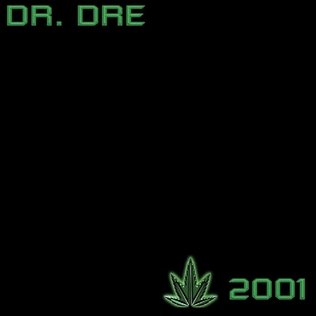
Label: Aftermath Entertainment / Interscope Records Format: 2LP Released: November 16, 1999 Recorded: 1998–1999, Record One / A&M / Larrabee / Encore (Los Angeles area) and Sierra Sonics (Reno, Nevada) Producers: Dr. Dre, Mel-Man, Lord Finesse
Overview
2001 is Dr. Dre’s second solo album and the record that answered years of doubt about whether he could still deliver after his acrimonious departure from Death Row Records. Released seven years after his genre-defining debut The Chronic, it expands on that album’s G-funk blueprint with sparser, more meticulously constructed beats — reduced sampling, more original instrumentation played by a rotating cast of session musicians (bassists Mike Elizondo and Colin Wolfe, keyboardist Scott Storch among them), and a colder, more minor-key sense of menace. Dre conceived the record less as a straightforward album than as a “movie,” with skits, interludes, and transitions stitching the tracks into a continuous, cinematic experience — “you’ve got build-ups, touching moments, aggressive moments,” as he put it at the time.
The album became a genuine commercial and cultural phenomenon, debuting at No. 2 on the Billboard 200 and eventually going six-times platinum, driven by an enormous cast of guest features — Snoop Dogg, Eminem, Xzibit, Kurupt, Nate Dogg, and many others — and three hit singles in “Still D.R.E.,” “Forgot About Dre,” and “The Next Episode.” Critically, it was almost uniformly praised for its production even as some critics took issue with its explicit, often misogynistic lyrical content; decades later, it’s regularly cited among the greatest hip-hop albums ever made, and its sound — those “gut-punching bass lines” and “mournful atmospherics,” as contemporary reviewers described it — has been cited by producers from Kanye West on down as directly formative.
Track by Track
Side A
- Lolo (Intro) — A brief, cinematic scene-setter (built around a sampled “Deep Note” sound) that establishes the album’s movie-like framing before the music proper begins.
- The Watcher — A moody, paranoid opener that sets the album’s tone of survivalist unease, later reissued as a single (featuring Eminem and Knoc-turn’al) in 2001.
- Fuck You — A slinky, sexually explicit track featuring Devin the Dude and Snoop Dogg that became a radio and chart presence despite never being an official single.
- Still D.R.E. — The album’s signature song and lead single: a stark, piano-driven beat (co-written by Jay-Z) and one of the most recognizable hip-hop instrumentals ever recorded, marking Dre’s triumphant return to the microphone.
- Big Ego’s — A brassy, sample-driven track (built on “Theme from The Persuaders!” and a Rose Royce sample) that keeps the album’s confident, victory-lap energy going.
Side B
- Xxplosive — A soul-sampling, laid-back G-funk classic featuring Hittman, Kurupt, Nate Dogg, and Six-Two; later cited by Kanye West as directly formative to his own production style.
- What’s the Difference — A tense, minor-key posse cut featuring Eminem and Xzibit, built around a Charles Aznavour sample and widely regarded as one of the album’s lyrical highlights.
- Bar One (Skit) — A brief scene-setting interlude that transitions the album into its next stretch.
- Light Speed — A tight, atmospheric instrumental-forward track that keeps the album’s cinematic pacing moving.
- Forgot About Dre — The album’s second single and a genuine cultural moment: Eminem’s ferocious guest verse and a triumphant, self-mythologizing hook helped the song win a Grammy and an MTV Video Music Award.
- The Next Episode — The album’s third single, featuring Snoop Dogg, Kurupt, and Nate Dogg over a beat built from replayed elements of David McCallum’s “The Edge”; one of the most enduringly quoted and sampled hip-hop tracks of its era.
Side C
- Let’s Get High — A hazy, funk-sampling track (built on the Fatback Band and Skyy) featuring Kurupt, keeping the album’s laid-back, weed-centric energy alive.
- Bitch Niggaz — An aggressive, sample-driven posse cut featuring Snoop Dogg, built on a sample of Audio Two’s “Top Billin’.”
- The Car Bomb (Skit) — A brief narrative interlude that transitions into the tracks that follow.
- Murder Ink. — A dark, horror-movie-indebted track (sampling John Carpenter’s “Halloween Theme” and Ini Kamoze’s “Here Comes the Hotstepper”) that leans into the album’s most menacing register.
- Ed-Ucation — A brief, comedic interlude featuring comedian Eddie Griffin, built around a sample of “Diamonds Are Forever.”
- Some L.A. Niggaz — A sprawling posse cut featuring Defari, King Tee, Knoc-turn’al, Kokane, MC Ren, and Time Bomb, showcasing the depth of Dre’s West Coast rolodex.
- Pause 4 Porno (Skit) — A comedic, explicit interlude that transitions directly out of “Some L.A. Niggaz,” part of the album’s self-aware, movie-like structure.
Side D
- Housewife — A dark, interpolation-driven track pulling from Dre’s own earlier “Bitches Ain’t Shit,” continuing the album’s more controversial lyrical themes.
- Ackrite — A tight, groove-driven track that keeps the album’s momentum going into its final stretch.
- Bang Bang — A tense, aggressive track featuring Knoc-turn’al that keeps the record’s darker energy alive heading toward the close.
- The Message — The album’s emotional closer, produced by Lord Finesse rather than Dre himself, and dedicated to Dre’s late brother; widely singled out by critics as the album’s most genuinely moving moment, showing a vulnerability largely absent from the record’s more explicit tracks.
The Vinyl Itself: Pressing & Sound Quality
This is a genuinely complicated title to shop for on vinyl, and the collector consensus is unusually clear about why: the original 1999 pressing, mastered at Bernie Grundman’s mastering house, has a strong and consistent reputation as one of the best-sounding hip-hop vinyl records ever made — reviewers describe enormous, tight low end, a huge soundstage, and vocals that sit perfectly in the mix, with more than one listener calling it among the best-sounding records in their entire collection. That reputation makes the more widely available 2019 reissue a genuine letdown for many buyers: while some copies are praised as quiet and well-pressed, a recurring and detailed complaint is that the bass — the single most important element of a Dr. Dre record — is thin, poorly separated from the kick drum, and lacking the texture and punch of the original, even on upgraded stereo systems. At least one reviewer who initially rated the 2019 pressing decently later returned to update their review after buying an original 1999 copy, confirming the original “is everything the 2019 pressing is not.”
Adding further complexity, this title has a long, messy history of censored versus uncensored variants circulating under the same catalog numbers and even the same barcodes across different pressing years (1999 original, 2009 Back to Black-era reissue, 2019 reissue), with some copies bearing censored cover art but uncensored audio, or vice versa — buyers specifically hunting for the fully explicit version should verify with a knowledgeable seller or check community-documented matrix and runout details rather than trusting the packaging alone. A 25th anniversary reissue (2LP, clear and green split vinyl) has also since appeared in the market. Given all this, the safest routes to strong sound quality are either an original 1999 pressing (mastered by Bernie Grundman) or a well-vetted later pressing specifically confirmed by other buyers to share that stronger low-end presentation, rather than assuming any reissue automatically replicates the original’s sound.
Final Verdict
2001 remains one of the towering achievements of West Coast hip-hop and one of the most influential-sounding rap records ever made — a genuine “movie” of an album, as Dre intended, with beats that have been mined for inspiration by an entire generation of producers since. Nearly every track carries weight, whether through sheer craft (“Xxplosive,” “The Next Episode”), star power (the Eminem-assisted “Forgot About Dre” and “What’s the Difference”), or genuine emotional payoff (the closing “The Message”). On vinyl, this is a title where the difference between a great and a merely decent pressing is unusually significant, given how central low-end presence is to the material — collectors serious about sound quality should prioritize tracking down an original 1999 Bernie Grundman-mastered pressing over the more commonly available 2019 reissue.
Highlights: “Still D.R.E.,” “Forgot About Dre,” “The Next Episode,” “Xxplosive,” “What’s the Difference,” “The Message”