 Vinyl Review
Helloween : Keeper Of The Seven Keys (Part II) : 1988
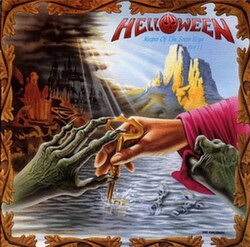
Helloween – Keeper of the Seven Keys (Part II) (1988 Vinyl)
Released August 29, 1988 on Noise International, Keeper of the Seven Keys (Part II) is the record that cemented Helloween’s reputation as the architects of power metal — bigger, more melodic, and more ambitious than its predecessor, and still regarded by many as the genre’s high-water mark. Recorded and mixed at Horus Sound Studio in Hannover in May/June 1988, with production and engineering from Tommy Hansen and Tommy Newton, it’s a genuinely landmark release, and one that’s held up remarkably well on original vinyl.
The Pressing
The original German gatefold LP (Noise International, catalogue SPV 08-4499) is a handsome piece of pressing history, though — as with a lot of late-80s European metal releases — it exists in a number of small print variants that collectors have documented closely over the years: some copies have a blue interior to the gatefold, others lilac; some list “Save Us” incorrectly on the side-B label (a track that doesn’t actually appear on this LP); some carry printed tour dates on the inner sleeve, others a blank white reverse; and “Manufactured in West-Germany” appears in different places (label vs. back cover) depending on the pressing run. None of this affects the music, but it’s worth knowing if you’re hunting a specific first pressing.
Sonically, opinions on the original pressing vary somewhat by regional pressing plant — some collectors have found certain reissues notably livelier and more detailed than their German or UK originals, while others have noted the reissue of Part I running hotter in volume than Part II‘s pressing. Broadly, though, the original vinyl is well-regarded: a full, punchy metal mix with plenty of low-end weight for the double-kick sections and enough clarity in the top end that the vocal harmonies and keyboard flourishes don’t get buried. It’s a gatefold sleeve with a printed inner sleeve featuring band photos, which adds a nice bit of physical presence to the package.
Side One
- Invitation — A brief, atmospheric intro built around a spoken-word narration and moody synths, setting a genuinely cinematic tone before the album kicks into gear. It’s a short piece, but an effective one — the vinyl’s low noise floor helps the quiet synth pads breathe before the record explodes into the next track.
- Eagle Fly Free — One of the definitive power metal anthems, full stop. Soaring vocal melodies, a triumphant chorus, and a guitar solo that’s become a genre touchstone. On vinyl the mix has real punch — the drums hit hard and the vocal sits confidently up front without being harsh.
- You Always Walk Alone — A slightly darker, more mid-paced track that shows the band’s range beyond straight-up anthems. The bassline has good presence in this pressing, and the dynamic shifts between verse and chorus come through clearly.
- Rise and Fall — Fast, aggressive, and technically demanding, this is one of the album’s heavier moments. It’s a good side-one closer, with the pressing handling the rapid-fire drumming and layered guitars without smearing into mush — no small feat for a fast, dense mix from this era.
Side Two
- Dr. Stein — Quirky, theatrical, and infectiously catchy, with its recurring “big science” spoken hook and playful arrangement. It’s one of the record’s most distinctive tracks, and the wide stereo image on this pressing gives the various vocal and instrumental layers room to be heard individually.
- We Got the Right — A driving, defiant anthem that leans into the album’s more populist, singalong tendencies. Straightforward but effective, and it benefits from the punchy low-mid presence that defines this pressing’s character.
- March of Time — A moodier, more introspective track that builds patiently rather than rushing to its climax. The dynamic range here is a good showcase for vinyl specifically — the quieter passages have genuine space before the track opens up.
- Keeper of the Seven Keys — The epic closer, running well over thirteen minutes and pulling together everything the album has built toward: shifting tempos, extended instrumental sections, and a genuinely grand sense of scale. As a side-two closer it’s a big ask of any pressing, but the original vinyl handles the track’s dynamic swings well, with enough headroom that the loudest sections don’t distort and the quieter interludes retain clarity.
Verdict
Keeper of the Seven Keys (Part II) on original 1988 vinyl is as essential a piece of metal history as the format offers — a genre-defining album, well-recorded and (allowing for some pressing-to-pressing variation typical of the era) generally well-served by its original LP release. The gatefold packaging and printed inner sleeve add real value for collectors, and while chasing a specific first-pressing variant can get into the weeds, any well-preserved original copy will deliver a punchy, dynamic listen that still holds up against far more modern productions.