 Vinyl Review
Pink Floyd : Relics : 1971
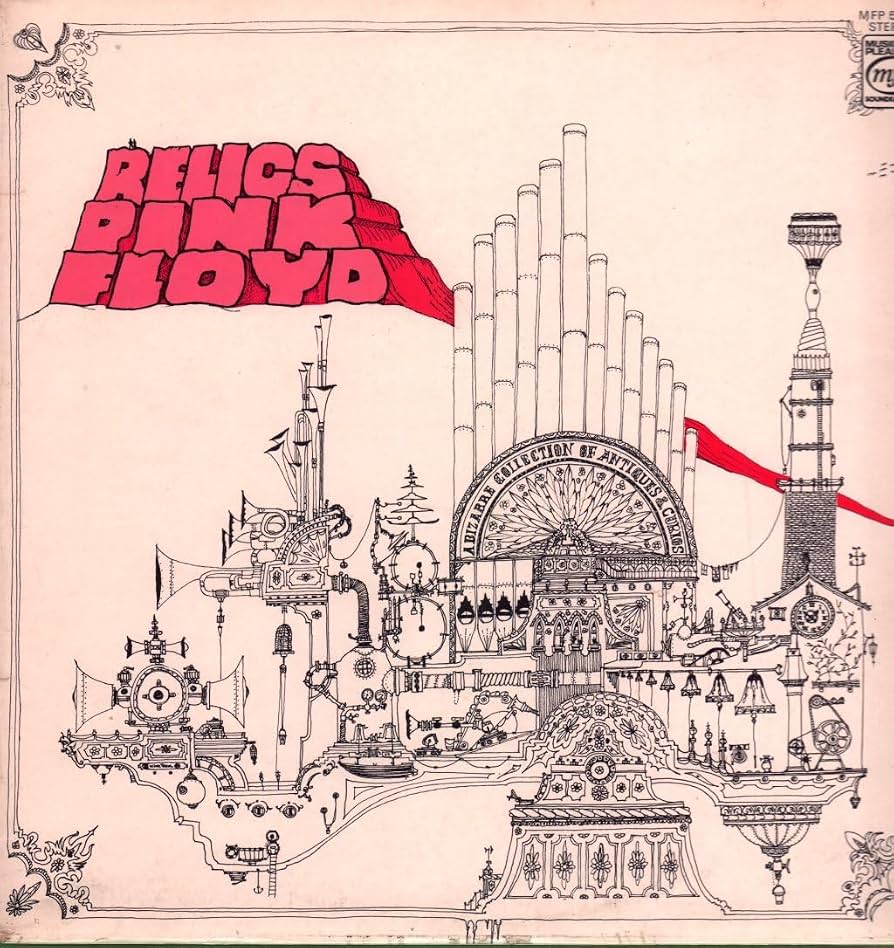
Pink Floyd – Relics: A Bizarre Collection of Antiques & Curios (1971 Vinyl)
Released May 14, 1971, on EMI’s budget Starline imprint, Relics wasn’t originally conceived as a grand artistic statement — it was a stopgap release, assembled because EMI grew concerned that a lengthy gap between studio albums (Pink Floyd had gone into the studio to record what became Meddle essentially without material) would leave fans with nothing new for over a year. The solution was to gather early singles, B-sides, and album tracks into an inexpensive compilation, alongside one previously unreleased curiosity, “Biding My Time.” Despite its budget origins, it’s since come to be regarded by critics as one of the band’s better compilations — a genuinely essential document of the Syd Barrett era, gathering hard-to-find singles like “Arnold Layne” and “See Emily Play” alongside deeper cuts.
The Pressing Original UK pressings on the blue Starline label (catalogue SRS 5071, issued in a distinctive matte, textured sleeve with Nick Mason’s hand-drawn artwork) are widely praised by collectors, with reviewers describing the sound as genuinely immersive — one specifically noting it felt like the band was performing in the room after a good cleaning. It’s worth knowing the album mixes mono and stereo material: “Arnold Layne” and “Interstellar Overdrive” are mono recordings electronically reprocessed for stereo playback, which gives those tracks a slightly different sonic character than the true stereo cuts surrounding them — not a fault, just a quirk of how the compilation was assembled from older masters.
Regional and pressing variants are numerous, reflecting the album’s long print run and multiple territories. A Japanese pressing on red “Everclean” vinyl has been singled out by at least one collector as a genuine highlight, with full, satisfying bass and excellent overall sound quality — a nice option for anyone chasing a distinctive, well-regarded colored vinyl copy. Australian pressings exist in several documented label variations (green and black HMV labels across different print runs), each with different publishing credits for “Biding My Time” — a genuine rabbit hole for dedicated collectors chasing a specific variant. A Dutch pressing has been noted by one reviewer as being on relatively light, thin vinyl, though without specific complaints about the resulting sound quality. Across the board, the consensus is that well-preserved original pressings — UK, Japanese, or otherwise — do genuine justice to this material, and the album has a reputation among fans for sounding like it “breathes differently” compared to more polished later-era Floyd records, fitting for a collection capturing the hazier, more psychedelic early period of the band.
Side One
- Arnold Layne — Syd Barrett’s mischievous, darkly comic debut single about a clothesline-sneaking cross-dresser, delivered with a genuinely infectious, off-kilter charm that captures the band’s early singles-oriented pop sensibility.
- Interstellar Overdrive — A sprawling instrumental freak-out, one of the band’s defining early compositions and a genuine showcase of their improvisational, exploratory tendencies during the Barrett era.
- See Emily Play — Another essential Barrett-penned single, melodic and gently psychedelic, with a instantly memorable hook — one of the band’s most enduringly beloved early songs.
- Remember a Day — Atmospheric and dreamy, one of Richard Wright’s early compositional contributions, showcasing a softer, more melodic side of the band.
- Paintbox — A Wright-penned single B-side, upbeat and melodic, offering a glimpse of material otherwise hard to find in the band’s wider catalogue at the time.
Side Two
- Julia Dream — A gentle, dreamy Waters composition, melancholic and atmospheric — another genuinely hard-to-find track that made this compilation valuable to fans at the time of release.
- Careful with That Axe, Eugene — Tense and slow-building, one of the band’s most enduringly menacing instrumental pieces, showcasing the moody, brooding atmosphere that would become a signature of their evolving sound.
- Cirrus Minor — Gentle and pastoral, featuring birdsong field recordings blended into a mellow, folk-inflected arrangement.
- The Nile Song — A genuinely heavy, aggressive rock track pulled from the More soundtrack — a surprising and welcome change of pace showing the band’s harder-edged side.
- Biding My Time — The compilation’s sole previously unreleased track, an odd, showtune-influenced curiosity unlike anything else in the band’s discography — genuinely unique, and a big part of what makes this compilation worth owning even for fans who have all the original albums.
- Bike — Syd Barrett’s endearingly eccentric closer, whimsical and strange, serving as a fitting farewell wink from the band’s original creative force.
Final Verdict
Relics remains a genuinely rewarding and historically important document of Pink Floyd’s earliest, Barrett-led era, and despite its budget-compilation origins, well-preserved original pressings — UK Starline copies, the well-regarded Japanese red vinyl edition, or various regional HMV pressings — consistently deliver a warm, immersive listening experience that suits this hazier, more psychedelic material beautifully. For fans who already own Piper at the Gates of Dawn and the band’s early singles, some content here will be familiar, but the presence of otherwise hard-to-find tracks like “Arnold Layne,” “Julia Dream,” and the genuinely one-of-a-kind “Biding My Time” makes this a worthwhile and distinctive addition to any collection tracing the band’s earliest, most experimental period.