 Vinyl Review
Pink Floyd : The Final Cut : 1983
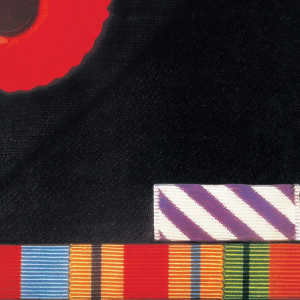
Pink Floyd – The Final Cut (1983 Vinyl)
Released March 21, 1983, on Harvest/EMI Records, The Final Cut — A Requiem for the Post War Dream is Roger Waters’ final album with Pink Floyd, effectively a solo record in all but name following keyboardist Richard Wright’s departure. Set against the backdrop of the Falklands Conflict and dedicated to Waters’ father, Eric Fletcher Waters (killed in World War II in 1944), the album is one of the band’s most personal, politically charged, and divisive works — sparse commercial hooks, no tracks ever played live by the full band, but a devoted following among Waters’ solo-era fans. Recorded across numerous London studios between July and December 1982, and mastered at the renowned Mastering Lab, it features “Holophonics” spatial sound effects from Zuccarelli Labs.
The Pressing Original 1983 pressings are consistently and enthusiastically praised, with reviewers across nearly every regional pressing describing exceptional soundstage, instrument separation, and dynamic range — genuinely impressive for an album many longtime fans admit isn’t their favorite in the catalogue on musical terms. UK first pressings (Harvest SHPF 1983) have drawn particular praise, with one reviewer specifically noting the pressing holds up remarkably well decades later, with barely a crackle despite heavy teenage-era play, and another calling out the “superb soundstage and incredible instrument separation,” warning listeners to brace for the famous fighter jet sound effect before “Get Your Filthy Hands Off My Desert.”
German pressings (mastered from “OG TML Doug Sax metal,” referencing legendary mastering engineer Doug Sax at The Mastering Lab) have been singled out by multiple collectors as among the best-sounding German pressings in the entire Pink Floyd catalogue — phenomenal dynamics, deep bass, clear mids, and well-defined highs, with one reviewer stating flatly that you cannot get a better pressing of this album. Japanese pressings (CBS/Sony) draw similarly glowing praise, with reviewers describing outstanding, super-dynamic, deep, and spacious sound with an absolutely quiet surface — traditionally a hallmark of Japanese vinyl manufacturing from this era. It’s worth noting a specialty “banded” promotional pressing also exists, distinguished by faded and separated tracks (rather than the continuous segues of the standard release) designed for radio programming — a genuine collector’s curiosity, though not recommended for actual album listening given it breaks up the intended flow. For anyone weighing this against later reissues: while some listeners feel the well-regarded 2016 remaster series is worth considering as an alternative, direct comparisons have found a clean original pressing offering a wider dynamic range and airier, more spacious presentation than at least one specific 2016 copy tested.
Side One
- The Post War Dream — A tense, atmospheric opener addressing themes of national decline and betrayed promises, setting the album’s mournful, politically charged tone immediately.
- Your Possible Pasts — Reflective and melancholic, blending Waters’ introspective songwriting with the album’s recurring war and memory themes.
- One of the Few — Brief and haunting, addressing the psychological toll of war on former soldiers.
- The Hero’s Return — Tense and dramatic, exploring themes of trauma and disconnection following wartime experience.
- The Gunner’s Dream — Widely regarded as one of the album’s genuine highlights, featuring ferocious drum work and a cascading guitar line that builds to a devastatingly sad refrain — one of the most emotionally powerful compositions on the record.
- Paranoid Eyes — A quieter, more understated track that some longtime fans find comparatively bland, though it fits the album’s overall mood of quiet despair.
Side Two
- Get Your Filthy Hands Off My Desert — Brief and aggressive, punctuated by a startling fighter jet sound effect — a genuine showcase for a good pressing’s dynamic range and stereo imaging.
- The Fletcher Memorial Home — Satirical and pointed, taking aim at world leaders with characteristic Waters venom.
- Southampton Dock — A quieter, more understated track whose subtle charms have grown on many longtime listeners over repeated plays, despite an initially unassuming first impression.
- The Final Cut — The album’s emotionally raw title track, featuring one of David Gilmour’s most gorgeous and affecting guitar solos — a genuine centerpiece of the record.
- Not Now John — Aggressive and confrontational, one of the album’s more divisive tracks, with some longtime fans finding it tired compared to the record’s stronger material — notably contains explicit language uncensored on standard pressings.
- Two Suns in the Sunset — A doom-laden, apocalyptic closer addressing nuclear annihilation, delivered with an intensity some listeners find genuinely moving and others find slightly over-the-top, bringing the album’s bleak themes to a suitably heavy conclusion.
Final Verdict
The Final Cut remains one of Pink Floyd’s most polarizing albums on musical terms — deeply personal, politically pointed, and light on the accessible hooks that defined the band’s earlier work — but original vinyl pressings across virtually every region (UK, German, and Japanese in particular) are consistently and enthusiastically praised for exceptional dynamics, soundstage, and instrument separation. This is a genuine case where the album rewards patient, attentive listening on a quality original pressing, even if it never achieves the commercial ubiquity of the band’s more celebrated releases. For fans of Roger Waters’ solo-adjacent songwriting and anyone willing to meet the record on its own somber terms, a well-preserved original pressing is a genuinely rewarding listen.