 Vinyl Review
Pink Floyd : Wish You Were Here : 1975
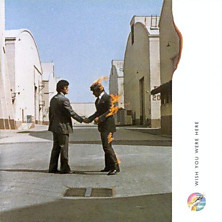
Pink Floyd – Wish You Were Here (1975 Vinyl)
Released September 12, 1975, on Harvest (UK) and Columbia (US), Wish You Were Here is Pink Floyd’s ninth studio album and a deeply personal meditation on absence — dedicated in large part to founding member Syd Barrett, no longer part of the band, while also critiquing the exploitative nature of the music industry. Recorded at Abbey Road Studios between January and July 1975, the album continued the sonic ambition of The Dark Side of the Moon, with all four band members contributing keyboards and effects across its five tracks.
The Pressing Original 1975 pressings are consistently and enthusiastically praised across virtually every region, and this ranks among the most reliably excellent-sounding vintage Pink Floyd albums to own on original vinyl. UK first pressings (Harvest SHVL 814) draw particularly glowing reviews — one collector who owns eleven different editions of the album called their original UK copy the best-sounding of the entire lot (with a specific earlier matrix variant possibly edging it out further), describing exceptional space, depth, and a remarkable sense of intimacy that pulls the listener directly into the recording.
French pressings have also drawn strong praise, with reviewers describing warm, detailed instrumental presence and a large soundstage — one collector noted the pressing’s quality remained “unbelievable” even on a scuffed, poorly cared-for copy, a testament to how well the original mastering holds up. Japanese first pressings (CBS/Sony) are similarly well-regarded, offering a big, three-dimensional soundstage with excellent instrument separation and dead-quiet surfaces, though at least one reviewer noted their Japanese copy still didn’t quite surpass their UK first pressing, and flagged some minor inner-groove distortion toward the end of “Have a Cigar.” US pressings from Columbia’s Santa Maria plant, cut by the legendary Harry Moss (identifiable by “HTM” in the runout), are also well-regarded among collectors specifically hunting for that mastering credit.
It’s worth knowing about a notable pressing-identification trap: because EMI Electrola in Cologne didn’t update the catalog number or copyright date on the jacket for a later reissue, many collectors mistakenly believe they own a 1975 or 1976 pressing when they actually have a later Direct Metal Mastering (DMM) cut — identifiable by a “-C” suffix in the runout matrix, denoting a lacquer cut on a copper DMM lathe rather than the original analog cutting process. If chasing a specific vintage pressing, it’s worth checking your runout carefully rather than relying solely on the printed catalog information.
Side One
- Shine On You Crazy Diamond (Parts I-V) — A sprawling, deeply emotional tribute to Syd Barrett, built on David Gilmour’s iconic four-note guitar motif and unfolding patiently across nearly thirteen minutes. It’s one of the most moving compositions in the band’s catalogue, and a good original pressing gives real depth and shimmer to the extended synthesizer intro and the interplay between the band’s various keyboard textures.
- Welcome to the Machine — A dark, mechanical, and atmospheric track addressing the dehumanizing nature of the music industry, built on layered synthesizers and unsettling sound effects.
- Have a Cigar — Featuring a guest vocal from Roy Harper, satirical and pointed in its critique of record industry exploitation, with a memorably funky, driving arrangement.
Side Two
- Wish You Were Here — The gorgeous, aching title track, opening with a radio-static effect before settling into one of the most beloved acoustic guitar passages in rock history — genuinely atmospheric and intimate, and a good pressing gives the recording’s subtle ambient textures real presence.
- Shine On You Crazy Diamond (Parts VI-IX) — The album’s extended conclusion, bringing the Barrett tribute to a suitably grand and emotional close, tying the record’s themes of absence and loss together.
Final Verdict
Wish You Were Here remains one of Pink Floyd’s most emotionally resonant and beautifully constructed albums, and original 1975 pressings — UK, French, Japanese, or well-sourced US copies — consistently deliver a genuinely exceptional listening experience, rich in warmth, depth, and atmosphere. This is an album where a well-preserved vintage pressing is widely considered worth the hunt, offering a level of intimacy and detail that suits the record’s deeply personal, melancholic character. Just be mindful of the well-documented pressing-identification quirk around later German DMM cuts before assuming any copy with a 1975-dated jacket is a genuine original.