 Vinyl Review
Various : 2001 – A Space Odyssey
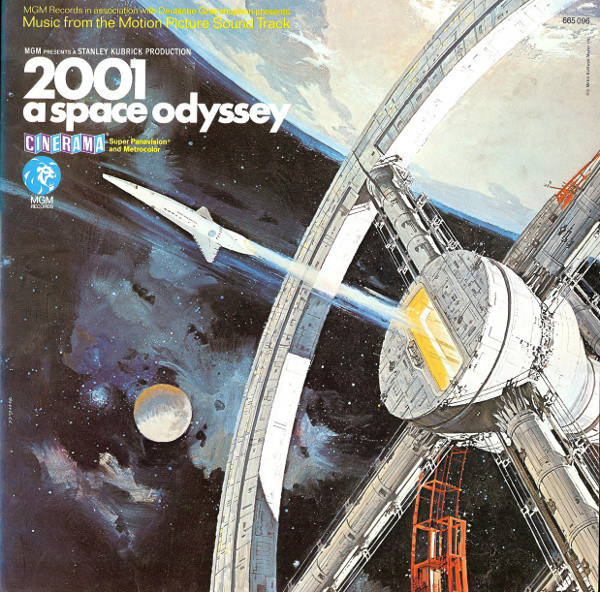
Various Artists – 2001: A Space Odyssey (Music From the Motion Picture Sound Track) (1968 Vinyl)
Released June 1968 on MGM Records in association with Deutsche Grammophon, this soundtrack accompanies Stanley Kubrick’s landmark film — though famously, the album is not an original score but rather a compilation of pre-existing classical and orchestral recordings that Kubrick selected and repurposed after abandoning composer Alex North’s specially commissioned score entirely. Compiled under Jesse Kaye and the MGM Studio Sound Department, the album draws its recordings from Deutsche Grammophon’s classical catalogue, featuring Richard Strauss’s Also sprach Zarathustra, Johann Strauss II’s The Blue Danube, and unsettling avant-garde pieces by György Ligeti, all pieces that became permanently and inseparably associated with Kubrick’s imagery.
The Pressing Original 1968 US pressings (MGM S1E-13 ST / CS 8078, mastered at the Deutsche Grammophon Gesellschaft pressing plant) are well-regarded by collectors, with at least one reviewer who found a still-sealed cellophane-wrapped copy calling it an excellent pressing. Given that all the musical content was licensed directly from Deutsche Grammophon’s own classical recordings, and mastering was handled at DG’s own pressing facility, this album benefits from genuinely strong source material — DG’s classical engineering reputation of the era was excellent, lending real weight and clarity to the orchestral and choral passages that define the record, particularly the thunderous timpani-and-organ climax of “Also sprach Zarathustra” and the eerie, densely layered vocal writing of Ligeti’s pieces.
Regional variants exist and are worth knowing about for collectors. UK pressings (MGM CS 8078, manufactured by MGM Records Ltd. and printed by Garrod & Lofthouse) circulated with a flipback sleeve design, and a later UK reissue via Polydor Records (pressed by PRS Ltd., printed by Clout & Baker) offers an alternative for those unable to find an original. Given the album’s relatively straightforward manufacturing — classical orchestral recordings licensed from a respected classical label, pressed without the complications of multi-generation rock mixing or compression — well-preserved copies across nearly any of these regional variants tend to deliver satisfying results, provided the vinyl itself hasn’t degraded significantly over more than five decades.
Side One
- Also sprach Zarathustra, Op. 30: Fanfare (Richard Strauss, performed by the Berlin Philharmonic under Herbert von Karajan) — One of the most instantly recognizable pieces of orchestral music in film history, opening the album with the same monumental sunrise fanfare that accompanies the film’s celebrated opening title sequence — a genuine showcase for a pressing’s ability to handle massive dynamic swings, from hushed opening tremolo to the full-throated organ and brass climax.
- Lux Aeterna (György Ligeti) — Haunting and dissonant choral writing, used memorably in the film’s lunar monolith sequence — dense, layered vocal harmonies that reward a pressing with genuine clarity and separation.
- Requiem: Kyrie (György Ligeti) — Similarly unsettling avant-garde choral work, contributing to the film’s eerie, otherworldly sound design.
- Gayaneh Ballet Suite: Adagio (Aram Khachaturian) — A somber, melancholic orchestral piece used to score the isolation of deep space travel, offering a contemplative contrast to the album’s more bombastic classical selections.
Side Two
- The Blue Danube (Johann Strauss II, performed by the Berlin Philharmonic under Herbert von Karajan) — Perhaps the album’s most beloved and iconic inclusion, this elegant waltz famously accompanies the film’s balletic space station docking sequence — warm, lush, and among the most purely enjoyable pieces of orchestral music ever committed to film.
- Atmosphères (György Ligeti) — Dense, shifting orchestral tone clusters that create an unsettling, alien sonic atmosphere — genuinely groundbreaking avant-garde composition repurposed to extraordinary cinematic effect.
- Requiem: Kyrie (reprise/alternate excerpt) — Further use of Ligeti’s disquieting choral writing.
- Also sprach Zarathustra, Op. 30: Fanfare (reprise) — The album closes by returning to Strauss’s monumental fanfare, mirroring its use as a structural bookend in the film itself, marking the Star-Child transformation at the story’s conclusion.
Final Verdict
2001: A Space Odyssey remains one of the most unusual and enduringly effective needle-drop soundtracks in film history — a compilation that took existing classical works and forged an entirely new, inseparable cultural association between them and Kubrick’s imagery. As a piece of vinyl, this benefits enormously from its unusual production circumstance: rather than a hastily assembled rock or pop soundtrack, this is essentially a Deutsche Grammophon classical compilation, mastered with the same care DG applied to its core catalogue, and pressed at its own dedicated facility. Original 1968 MGM pressings are well-regarded and still reasonably findable, offering genuinely excellent orchestral and choral fidelity for a record now well over half a century old. For fans of the film, classical music, or film score history more broadly, this remains an essential and genuinely rewarding listen on vinyl.