 Vinyl Review
Joni Mitchell — Don Juan’s Reckless Daughter (1977, Original Pressing, Asylum Records)
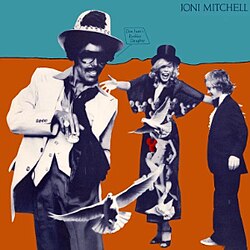
This is Joni Mitchell at her most unguarded and uncommercial — a double album released right at the tail end of her Asylum contract, when she apparently decided to stop worrying about what anyone expected of her. It’s sprawling, jazz-soaked, occasionally difficult, and light-years from the folk records that made her famous. Original 1977 copies are a proper double-LP, gatefold, four-sided experience, and honestly this record almost demands the format — it wasn’t built for shuffle or even for a single uninterrupted sitting. It’s a record you live inside for a while, not one you drop in and out of.
Where It Was Recorded, Mastered & Pressed
The bulk of the album was recorded and mixed at A&M Studios in Hollywood, with the orchestral parts done separately at Columbia’s Studio C in New York and some additional recording at Basing Street Studios in London. Mastering was handled at A&M Studios in Los Angeles by Bernie Grundman — so even on the original 1977 pressing, his hands were already on this record decades before his name became shorthand for “trustworthy Joni reissue.” Pressing plants varied by region and print run — U.S. copies show up from a few different plants (Quality Records among them), and UK pressings were manufactured by Elektra/Asylum/Nonesuch’s UK operation, with quality reportedly a bit inconsistent depending which run you land — some collectors flag certain U.S. pressings as prone to surface noise, so condition matters more than usual with original copies of this one.
The Pressing
Original 1977 copies are a genuine artifact of their era — heavier tip-on-style gatefold sleeve, custom printed inner sleeves with the lyrics and art, and Les Krims’ photography on Joni’s dress on the cover (a piece of artwork that’s its own whole conversation given the blackface imagery, which is worth sitting with honestly rather than glossing over). Sonically, when you get a clean copy, it’s a genuinely rich, detailed pressing — Jaco Pastorius’s bass has real presence and low-end weight, which matters enormously on a record where he’s practically a co-lead voice throughout. The auto-coupled four-side sequencing means you’re flipping and swapping discs constantly, which sounds like a hassle written down but actually becomes part of the ritual of the record once you’re used to it.
Track-by-Track
Side One
1. Overture — Cotton Avenue — Six overdubbed guitars in different tunings shouldn’t work this well together, but it does, and it eases you into the record’s whole disorienting, layered logic before a single lyric even lands.
2. Talk to Me — This one’s fast and almost frantic in its wordplay — Joni rattling off imagery like she’s afraid of losing the thread if she slows down.
3. Jericho — A rerecording of an older song, and it feels warmer and more settled than anything else on side one, like a breath before the record gets stranger.
Side Two
4. Paprika Plains — Sixteen minutes, and I won’t pretend I loved it on first listen. It took me multiple plays to stop waiting for it to “become a song” and just let it be the sprawling piano improvisation it wants to be. Now it’s one of my favorite things she’s ever recorded.
Side Three
5. Otis and Marlena — A strange little character sketch set against a Vegas backdrop — there’s something almost cinematic about how specific and unglamorous the details are.
6. The Tenth World — Pure Latin percussion, practically no “song” at all, and it still catches me off guard how much it commits to being exactly what it is rather than easing listeners in.
7. Dreamland — Just voices and percussion, Chaka Khan included, and it feels like the record’s most playful, least self-serious moment.
Side Four
8. Don Juan’s Reckless Daughter — The title track, and it’s actually one of the more conventionally structured songs here — after everything before it, that feels almost like relief.
9. Off Night Backstreet — Slinky and a little seedy in the best way, with Jaco’s bass doing a lot of the emotional heavy lifting again.
10. The Silky Veils of Ardor — Closing solo, just Joni and her guitar, and after four sides of orchestras and percussion ensembles and jazz fusion detours, ending this small and this alone feels like the most honest choice she could’ve made.
Final Thought
This isn’t the Joni Mitchell record you hand someone as an introduction — it’s the one you come back to once you already love her and want to watch her refuse to repeat herself. An original 1977 pressing, gatefold open, four sides in sequence, is genuinely the way this record wants to be heard — it’s stubborn and uneven and occasionally brilliant in exactly the way she clearly wanted it to be, contract expectations be damned.