 Vinyl Review
Pink Floyd – More (1969)
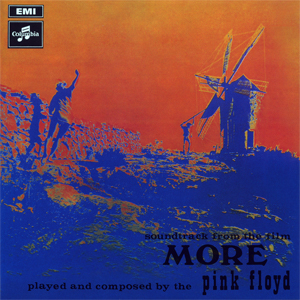
There’s a particular kind of thrill that comes from flipping through a well-worn crate in a shop you weren’t even sure would have anything worth the trip. That’s exactly how this one turned up — tucked into the psych/prog section at Castle Sounds in Christchurch, wedged between a couple of other records that made the visit worth every minute. A tidy early Hawkwind pressing was sitting a few sleeves along, and just behind it, a slightly foxed but perfectly playable Kevin Ayers LP that I nearly walked past. But it was the plain, unassuming Hipgnosis sleeve of Soundtrack From The Film “More” that stopped me cold — that faded green-tinted photograph on the back, the couple gazing off to one side, unmistakably late-’60s. A quick flip to check the labels for pressing details, a nod to myself, and it came home with me.
More is Pink Floyd’s soundtrack for Barbet Schroeder’s 1969 film of the same name, released in the UK on 13 June 1969 on Columbia (SCX 6346). It’s a record that tends to get overlooked in the catalogue — sandwiched as it is between A Saucerful of Secrets and Ummagumma — but it holds a particular significance: it’s the first Floyd album made entirely without Syd Barrett, the first without producer Norman Smith, and one of only a handful of Floyd records with David Gilmour as sole lead vocalist throughout. Recorded quickly to meet the film’s deadline, it swings between fragile acoustic balladry and some of the heaviest, most unhinged playing the band ever put to tape.
Track Listing
Side One
- Cirrus Minor — A gentle, birdsong-laced opener that eases you in rather than announcing itself. Gilmour’s acoustic guitar and reverb-drenched vocal set a pastoral, slightly melancholy tone that has little to do with anything Floyd had done before.
- The Nile Song — A hard left turn. Distorted, snarling, almost proto-metal in places — genuinely startling the first time you hear it after that opener. It’s the loudest, most aggressive thing the band recorded in this era.
- Crying Song — Back to hushed acoustic territory, with Richard Wright’s keys drifting underneath. Understated and easy to underrate, but it rewards a close listen.
- Up the Khyber — An instrumental workout led by Wright and Nick Mason, loose and jazzy, almost improvisational in feel.
- Green Is the Colour — One of the record’s genuine highlights and a track that lived on in the band’s live sets for years afterward. Simple, wistful, and quietly one of Gilmour’s best early vocal performances.
- Cymbaline — The clear centrepiece of the side. Atmospheric, unsettling lyrics about paranoia and dreams, building slowly with some lovely interplay between guitar and organ. Another one that had a long life on stage.
- Party Sequence — A brief percussive sketch, more mood-setting than song — functional as film music, a curiosity on record.
Side Two
- Main Theme — A moody, largely instrumental piece that stretches out and lets the band breathe. Feels like a bridge between the Saucerful era and where they’d head next.
- Ibiza Bar — Essentially a variation on “The Nile Song,” heavy and driving again, with a rawness that suits the film’s setting.
- More Blues — Exactly what it says — a short, loose blues instrumental, more texture than statement.
- Quicksilver — The most experimental cut here, all shimmering, formless atmosphere. This is where the “avant-garde soundtrack” side of the record really shows itself, pointing toward the extended pieces on Ummagumma.
- A Spanish Piece — A brief, faintly comic acoustic guitar vignette with Gilmour doing a mock-Spanish accent over the top. Slight, but charming.
- Dramatic Theme — A fittingly moody instrumental close, echoing the “Main Theme” and rounding things off without ceremony.
Final Thoughts
More isn’t an essential Floyd album in the way Meddle or Dark Side are, and it doesn’t try to be — it’s a working soundtrack, stitched together in patches, and it shows. But that’s also what makes it worth owning on vinyl rather than just streaming: it’s a genuine snapshot of a band mid-transformation, still finding its identity after Barrett, already capable of both delicate folk (“Green Is the Colour,” “Cymbaline”) and genuine heaviness (“The Nile Song,” “Ibiza Bar”), with side two drifting into the exploratory instrumental territory they’d chase further on Ummagumma. The original UK Columbia pressing has a warmth and presence that suits the record’s loose, sketch-like nature — this isn’t a hi-fi showcase record, it’s an atmosphere record, and the vinyl format does that atmosphere justice. A lovely, slightly unassuming find, and a good reminder that the best record shop trips are the ones where you weren’t looking for anything in particular.