 Vinyl Review
The Moody Blues – Days of Future Passed
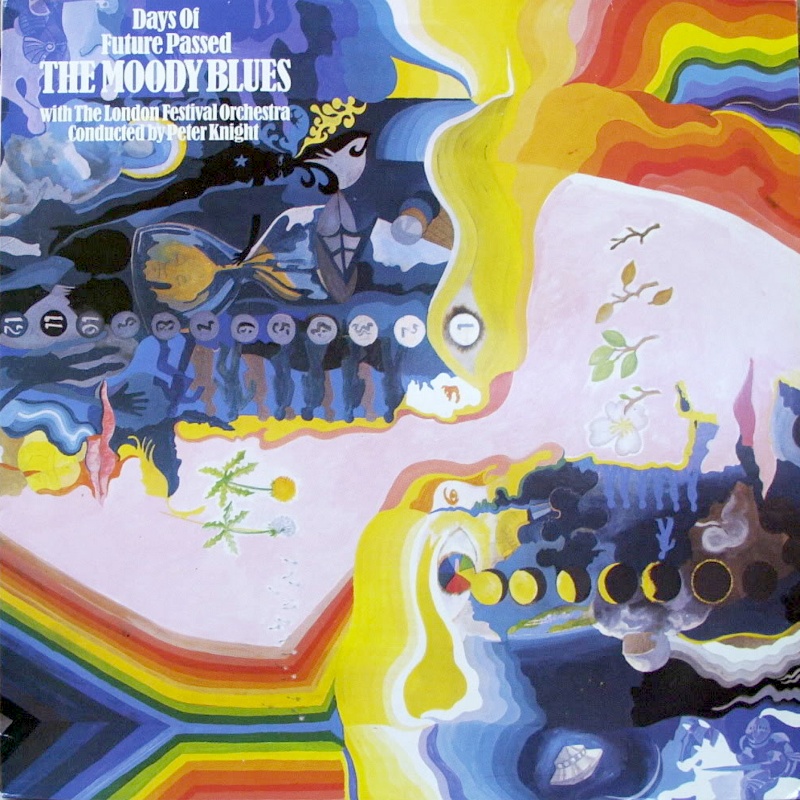
Poole was the destination this time, and The Den turned out to be exactly the kind of shop that rewards patience. But wedged in a box, between the vendors selling old reclaimed furniture, in a laminated flipback cover with that deep-blue artwork, was a UK pressing of The Moody Blues’ Days of Future Passed. The sleeve had some honest wear — a soft crease along the spine, a little shelf-wear at the corners — but the vinyl itself looked well cared for, and that was all the convincing I needed. It came home with me from Poole.
Days of Future Passed was released in the UK in November 1967 on Deram (SML 707), credited to The Moody Blues with the London Festival Orchestra, conducted by Peter Knight. It began life, famously, as a commercial exercise — Decca wanted a rock reworking of Dvořák’s “New World Symphony” to demonstrate its new Deramic Stereo Sound. Producer Tony Clarke and the band had other ideas, and instead delivered a concept album tracing the course of a single day, with orchestral interludes stitching the songs together. The result is one of the founding records of orchestral/symphonic rock, and it’s the album that turned The Moody Blues from a fading R&B act into pioneers of a whole new sound.
Track by Track
Side One
- The Day Begins — A grand, sweeping orchestral overture that sets the whole concept in motion, with Mike Pinder’s spoken-word recitation of “Morning Glory” arriving near the end. Ambitious and a little theatrical, it announces immediately that this isn’t a conventional rock record.
- Dawn: Dawn Is a Feeling — The strings give way to the band proper for the first time. Gentle, dreamy, and warmly sung — the Mellotron work here is a big part of what gives the record its signature texture.
- The Morning: Another Morning — Light and airy, almost pastoral, with Ray Thomas’s flute lending a genuinely English, slightly whimsical charm.
- Lunch Break: Peak Hour — A sudden jolt of energy. This is the album’s most driving, rock-forward moment, evoking the rush and bustle of a working day with real momentum.
- The Afternoon: Forever Afternoon (Tuesday?) / (Evening) Time to Get Away — The emotional high point of side one. “Tuesday Afternoon” (as it’s better known) is one of the record’s best-loved songs, languid and hazy, before shifting into the more urgent “Time to Get Away.”
Side Two
- Evening: The Sun Set / Twilight Time — A graceful, contemplative suite. “The Sun Set” is quiet and reflective, easing into the brighter, more melodic “Twilight Time,” which stayed in the band’s live sets for years.
- The Night: Nights in White Satin — The centrepiece and the song the album is remembered for above all else. Justin Hayward’s aching vocal, that famous Mellotron flute line, and the closing “Late Lament” recitation from Graeme Edge bring the whole day-long concept full circle. It’s a genuinely rare thing: a song that’s both massively popular and still capable of stopping you in your tracks.
Days of Future Passed is one of those records where the ambition of the concept matches the quality of the songs, which doesn’t happen nearly as often as liner notes like to claim. What began as a technology demonstration became something far stranger and more durable — a genuine fusion of rock band and orchestra that neither side dominates, thanks in large part to Peter Knight’s arrangements threading the two together rather than layering one on top of the other. Side one has real warmth and variety, from the bustle of “Peak Hour” to the drift of “Tuesday Afternoon,” but it’s side two — and “Nights in White Satin” in particular — that seals the record’s place in history. On original UK vinyl, the dynamic range between the hushed passages and the full orchestral swells has a richness that later, more compressed reissues tend to flatten out. A record that more than earns its spot in the collection, and another reminder that the best finds are the ones you stumble into on an ordinary trip to Poole.