 Vinyl Review
Air Supply – Lost in Love (1980)
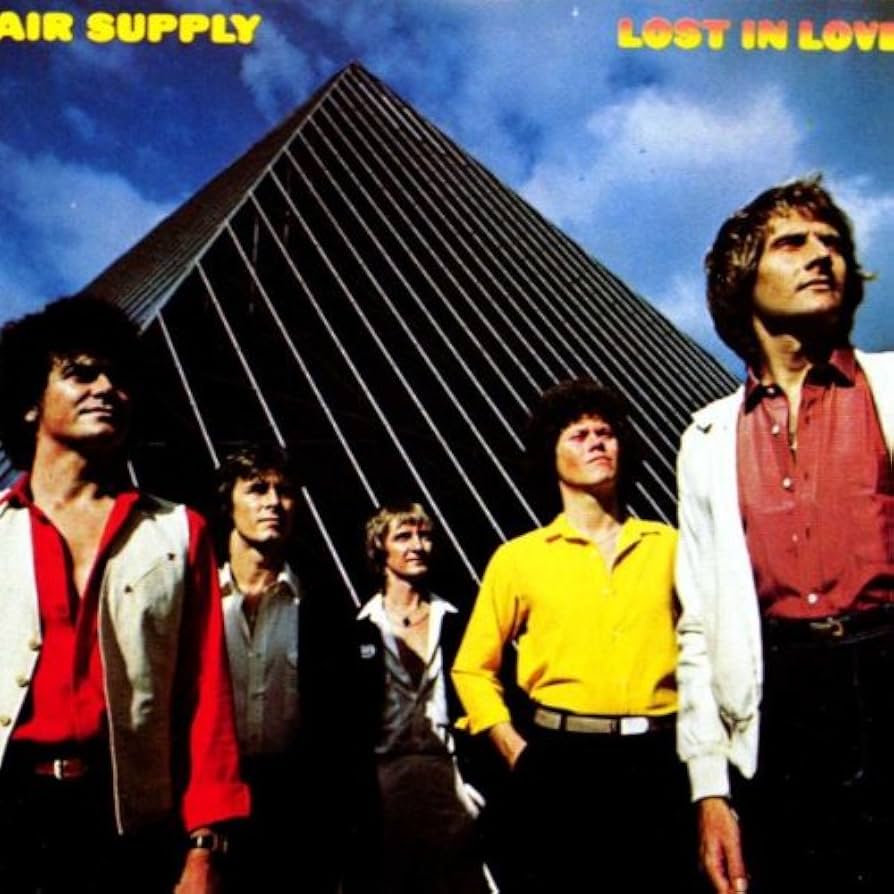
Nothing about a record shop says “serious” like the crate-digging, and I’ll admit Lost in Love isn’t a record I’d have predicted in my own collection. I’m an indie-shop man. I’d rather lose a Saturday flicking through bins in Poole, Wimborne or Totnes than click “buy now” on anything. But soft rock like this has a way of getting under your guard. Air Supply are easy to mock and hard to forget, and this is the album where it all began for them outside Australia. I’ve got the UK 1980 pressing on the turntable, a clean record, and a free afternoon. Here’s how it holds up.
Side One
- Lost in Love (3:51): The perfect opener. It’s the title track and still the one most people think of as their signature song. It peaked at No. 3 on the US chart in May 1980 and earned Graham Russell a composer award. The vocal sits front and centre, and the strings arrive just when you expect them to.
- All Out of Love (3:59): The big one. It was the album’s biggest hit, reaching No. 2 in the US. It’s melodrama at its most shameless, and I mean that as a compliment. Hearing that chorus on vinyl, with a bit of warmth in the sound, is a treat.
- Every Woman in the World (3:33): A slightly brighter, more pop-leaning moment. It reached No. 5 in the US. It was written by outside songwriters rather than Russell, and it shows in the best way, with a slicker, more radio-ready feel.
- Just Another Woman (3:51): The odd one out. It’s a more upbeat, disco-flavoured number, and it was originally released on the earlier album Life Support. A change of pace that works.
- Having You Near Me (3:50): A gentle closer for side one, the kind of slow-burner you’d put on while making tea. Pleasant rather than thrilling, but it does its job.
Side Two
- American Hearts (3:13): A decent start to side two. It shares writers with “Every Woman in the World”, and the two sit together nicely.
- Chances (3:31): Never a single, but it’s turned up on plenty of the band’s hits compilations. That tells you something. It’s a quiet highlight and one of the better deep cuts.
- Old Habits Die Hard (3:03): Short and sweet, with a touch more guitar bite than you’d expect.
- I Can’t Get Excited (5:01): At just over five minutes, it’s the longest track by a distance, and it gives the band room to stretch out.
- My Best Friend (2:32): The shortest song, which makes a neat, modest sign-off. It’s brief and unfussy, and the stylus lifts without any drama.
This is an Australian record at heart. The sessions ran from 1978 to 1979, mostly in Sydney, at Trafalgar Studios, Paradise Studios and Studios 301. The credited recording engineers are Martin Harrington, Peter Walker and Richard Lush, with Harrington’s name appearing most prominently on the credits I could find. The credits don’t tidily assign each engineer to each track, so I won’t pretend to. The title track was recorded at Trafalgar in Sydney and mixed at Soundmixers in New York. American polish was added afterwards. Harry Maslin produced and mixed “Every Woman in the World” and “American Hearts”, with Clive Davis as executive producer.
- The album cover was photographed in front of the now-demolished tropical centre in Sydney’s Botanic Gardens. It’s the pyramid-style glasshouse behind the band on the sleeve.
- It was the first Air Supply album to include songs not written by Graham Russell.
- It reached No. 22 on the US Billboard 200 and was eventually certified 2× platinum by the RIAA.
- Tommy Emmanuel is credited on guitars. A bit of serious guitar pedigree on a very sweet record.
- Mastering was done by John Golden at Kendun Recorders in Burbank. That’s a Los Angeles finish on a Sydney-recorded record.
Final Thoughts
I came to this record expecting a guilty pleasure and found something more interesting: a tightly made, carefully produced pop album that knew exactly what it wanted to be. Side one is the star turn, three huge singles stacked up, while side two rewards patience with a few quieter, more modest songs. It’s not a record that challenges you. It’s one that wraps around you, and on a wet Dorset evening that’s no bad thing.
It also reminds me why I like buying records the way I do. You never quite know which dusty sleeve will turn out to be the one you play three times in a row.