 Vinyl Review
Donna Summer — The Greatest Hits of Donna Summer (1977)
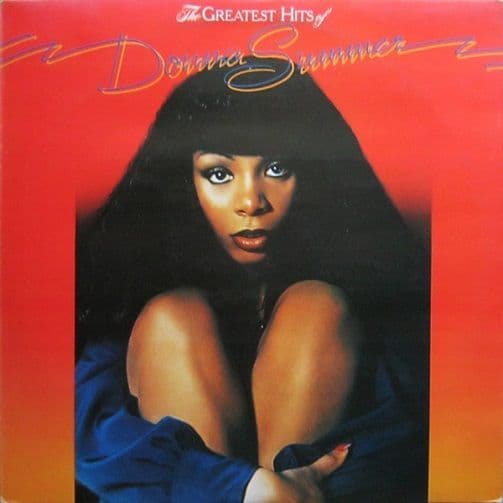
Label: GTO · Catalog: GTLP 028 · Format: Vinyl LP, compilation, stereo · Country: UK
Introduction
This is a British compilation with no American equivalent. Donna Summer was signed to Casablanca in the US, but in the UK her records came out on GTO, an independent label run by Dick Leahy. GTO put this collection together in late 1977, perfectly timed: “I Feel Love” had just spent four weeks at UK No. 1 that summer, and “Love’s Unkind” was climbing toward No. 3 as Christmas approached. The album went on to reach No. 4 on the UK Albums Chart.
That timing defines what the record is. It is not a career overview. It’s a snapshot of Summer’s first Munich period with producers Giorgio Moroder and Pete Bellotte, from Love to Love You Baby (1975) to I Remember Yesterday (1977). It catches her just before she became a global superstar with “MacArthur Park,” “Hot Stuff” and “Bad Girls.” For a UK collector, it’s the definitive document of the Euro-disco Donna.
Track Listing
Side One
A1. I Feel Love (Summer/Moroder/Bellotte)
This is one of the most influential records of the 20th century, and putting it first is exactly right. Almost every sound on it, apart from a real kick drum, was generated on a Moog modular synthesizer at Musicland Studios in Munich, a studio in the basement of the Arabellahaus hotel. The pulsing bassline is a sequenced Moog pattern sent through a delay, which gives it that relentless galloping shimmer. Summer floats a breathy, wordless-sounding vocal above it all. When Brian Eno heard it, he reportedly told David Bowie it was “the sound of the future.” Techno, house, synth-pop and Hi-NRG all trace a line back to these six minutes.
A2. Could It Be Magic (Manilow/Anderson)
This one comes from A Love Trilogy (1976). Barry Manilow’s ballad, built on Chopin’s Prelude in C minor, becomes a sultry disco track, with the familiar piano intro giving way to a four-on-the-floor groove. It was a modest UK hit and shows how Moroder could turn almost anything into dance music.
A3. Winter Melody (Summer/Moroder/Bellotte)
This is from Four Seasons of Love (1976), the concept album with one song per season. It’s a gentle, melancholy, orchestral track and one of Summer’s more understated vocals. It was a UK Top 30 hit, and it’s a lovely, wistful moment.
A4. Wasted (Summer/Moroder/Bellotte)
Another track from A Love Trilogy. It’s a mid-tempo, slightly bitter song of romantic regret. Its inclusion over bigger hits is a curiosity, but it gives the side some emotional variety.
A5. Try Me, I Know We Can Make It (Summer/Moroder/Bellotte)
On A Love Trilogy this filled most of a side as a nearly 18-minute suite. Here it’s heavily edited. It’s lush, sweeping, string-drenched disco. It loses some of its hypnotic build in the edit but remains a strong dancefloor track.
Side Two
B1. I Remember Yesterday (Summer/Moroder/Bellotte)
This is the title track of the 1977 concept album, which ran through musical eras from the 1940s toward the future, ending with “I Feel Love.” It’s a swinging big-band pastiche set over a disco beat. It reached UK No. 14 and is great fun.
B2. Spring Affair (Summer/Moroder/Bellotte)
This is the opening song of Four Seasons of Love. It’s a bright, airy, optimistic track with a buoyant groove, and it’s one of her prettiest early recordings.
B3. Love’s Unkind (Summer/Moroder/Bellotte)
This was the current hit when the album came out, peaking at UK No. 3. It’s a 1960s girl-group pastiche from I Remember Yesterday, with handclaps, sweet harmonies and a teenage heartbreak story. It was a much bigger hit in Britain than in America and gives a sense of how differently UK audiences heard Summer.
B4. Love to Love You Baby (Summer/Moroder/Bellotte)
This is the record that started it all. Casablanca boss Neil Bogart asked for a longer version of the original demo, and the result filled a whole side of the LP at nearly 17 minutes. Summer reportedly recorded her vocal lying on the studio floor with the lights low. Its moaning sensuality caused a scandal, led to radio bans in several countries, and earned her the tabloid title “First Lady of Love.” The version here is around 12:51, an edit of the full-length album version. It’s still long enough to show off the hypnotic groove that helped invent the extended dance mix.
Details for Enthusiasts
Production and recording
- Producers: Giorgio Moroder and Pete Bellotte. Bellotte, a British-born lyricist and producer, wrote many of the lyrics with Summer.
- Studio: Musicland Studios, Munich, the base for the “Munich Sound.” Later in the decade it also hosted Queen, the Rolling Stones, ELO and Led Zeppelin.
- Engineering: Jürgen Koppers is widely credited as the engineer on the classic 1975–77 Moroder/Summer sessions, including “I Feel Love.” Musicland’s in-house team, which later included Reinhold Mack, shaped the polished, crisp sound of the studio. The UK compilation’s own mastering and cutting credits are not well documented, so check the label, sleeve and runout etchings on your copy.
- Synthesizer work on “I Feel Love”: Moroder’s synth programming was reportedly helped by Robbie Wedel, who knew the Moog modular well. Session drummer Keith Forsey, later producer of Billy Idol and Simple Minds, played the kick drum. Getting the Moog to stay in sync was notoriously difficult.
Why this UK compilation matters
- It’s GTO-specific. The American Casablanca catalog didn’t release an equivalent until the double album On the Radio: Greatest Hits Volumes I & II in 1979, which has a different track list.
- It reflects UK chart history. Including “Love’s Unkind,” “I Remember Yesterday,” “Winter Melody” and “Could It Be Magic” mirrors British success, since several of these barely registered in America.
- Notable absences: “Down Deep Inside,” her 1977 theme song for the film The Deep, co-written with John Barry and a UK Top 5 hit, isn’t here. Nor is anything from Once Upon a Time (October 1977), which arrived too late or was held back to protect its sales. “Back in Love Again,” a UK Top 30 single from I Remember Yesterday, is also missing.
- Chart position: No. 4 in the UK, which made it one of GTO’s biggest-selling albums.
Collecting notes
- Availability: this was a big seller, so copies are common and usually cheap. Condition is what matters. Party records were often heavily played, and the long tracks on side two show wear quickly.
- Variants: there was a matching cassette (GTMC 028) and an 8-track (GTET 028). Later pressings and overseas licensed editions may differ in label design.
- Track count: at least one dealer listing describes this as a “10-track” album, but the confirmed track list has nine titles. Treat the “10” as a listing error.
- Sound: a clean original UK pressing of “I Feel Love” can sound superb. The synth bass has real weight on vinyl. Side two is long, though, at more than 25 minutes, and the grooves had to be cut tighter and quieter as a result. Expect lower volume and a slightly softer low end than side one.
Final Thoughts
The Greatest Hits of Donna Summer is a lovingly timed snapshot of a pivotal moment. It catches Summer and Moroder after they had invented a sound but before global stardom smoothed it into mainstream pop. Side one opens with the most important electronic dance record ever made. Side two closes with the record that created the extended disco mix. In between are some of Summer’s most charming, underrated early songs.
Its weakness is that it’s a period piece. The album lacks the stadium-sized hits that came later, and some choices (“Wasted,” the edited “Try Me”) are filler to anyone who isn’t a devoted fan. As a document of the Munich years, though, and of how British audiences loved Summer before America fully caught up, it’s excellent.
Highlights: “I Feel Love,” “Love to Love You Baby,” “Love’s Unkind,” “Spring Affair.”
Weakest moment: “Wasted.”