 Vinyl Review
George Clinton — The Cinderella Theory (1989)
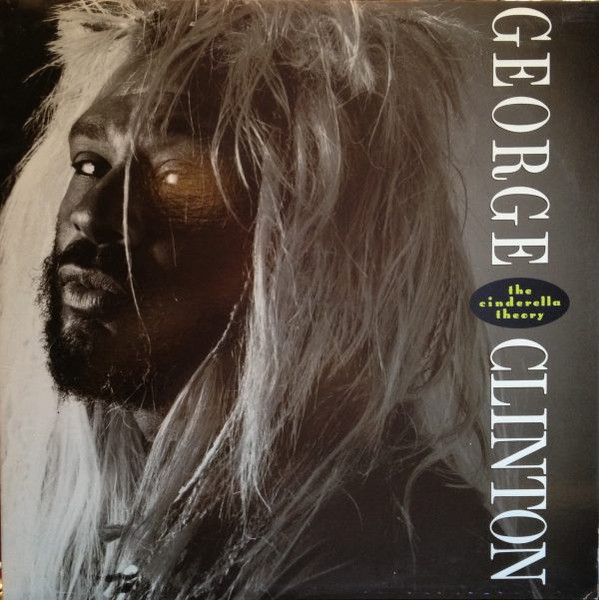
Labels: Paisley Park / Warner Bros. Records · Catalog: 1-25994 / 9 25994-1 (US vinyl LP)
Released: 2 August 1989 · Producer: George Clinton (for Baby Clinton Inc.) · Recorded: United Sound Systems, Detroit
Introduction
By the late 1980s, George Clinton was a legend without a label. Parliament and Funkadelic had collapsed under legal and financial chaos at the turn of the decade. Clinton recovered with “Atomic Dog” (1982) on Capitol, but by 1986 that deal was over too. Meanwhile, a generation of hip-hop producers was building hits out of P-Funk samples, while Clinton struggled to get his own records released.
Then Prince, a lifelong P-Funk fan, offered him a home on Paisley Park Records. The Cinderella Theory was the first result. The title itself is a sly joke: it’s a comeback fairy tale, with Clinton as the overlooked stepsister finally invited to the ball.
The album is no lost masterpiece, but it’s better than its commercial failure suggests. It connects classic P-Funk with the hip-hop it inspired, bringing in a younger generation of musicians, Clinton’s son, and Public Enemy, the most important rap group of the moment.
Track Listing (US vinyl LP)
Side One
A1. Airbound (Tracey Lewis) · 4:21
This is an unusual opener: a song by Clinton’s son Tracey “Trey Lewd” Lewis, rather than by Clinton himself. It’s a hazy, floating mid-tempo piece with a massed choir of more than 25 background singers, a classic P-Funk touch. It works as an overture, signaling a family affair rather than a solo star turn.
A2. Tweakin’ (Bishop/Spradley/Chuck D/Flavor Flav) · 6:21
This is the album’s main event, featuring Chuck D and Flavor Flav of Public Enemy. The track was built by keyboardist David Spradley (a P-Funk veteran) and sound engineer Bob Bishop. It’s a dense, grinding hybrid of electro-funk and hip-hop. Clinton and Chuck D trade lines about drugs, paranoia and the street. The pairing has symbolic weight: Public Enemy’s Bomb Squad sampled P-Funk constantly, and here the source and the sampler meet face to face. Flavor Flav’s interjections add chaos. It was released as a single and 12″.
A3. Cinderella Theory (Clinton/Fiddler) · 5:09
The title track was co-written with keyboardist Joseph “Amp” Fiddler, who later mentored J Dilla. It’s late-1980s funk with plenty of synth, drum programming and Clinton’s sideways storytelling. The production is very much of its moment, but the groove is real.
A4. Why Should I Dog U Out? (Clinton/McKnight/Fiddler/Merrill) · 6:28
This was the first single, positioned as a sequel to “Atomic Dog,” and it brings back the canine theme. It’s a long, slinky groove with a bassline that bounces nicely. DeWayne “Blackbyrd” McKnight, later a Red Hot Chili Peppers guitarist, co-wrote it. The video is a who’s who of 1989 hip-hop, featuring Ice-T, Afrika Bambaataa, MC Hammer, Run-DMC, Daddy-O, Kool G Rap & DJ Polo and Al B. Sure! It’s arguably the album’s best pure funk track.
Side Two
B1. Serious Slammin’ (Zales/Crockett) · 4:56
This is a hard, machine-driven dance track built on programmed drums. Lelan Zales and Greg Crockett wrote it, without Clinton. It’s energetic, but it’s also one of the more anonymous moments here and sounds most like typical late-1980s R&B.
B2. There I Go Again (Clinton/Fiddler/Harris) · 4:56
This is a smoother, more melodic number, closer to ballad-funk. The vocal arrangement shows off the P-Funk choir tradition. It’s pleasant, if unremarkable.
B3. (She Got It) Goin’ On (Shawn Clinton/Fiddler) · 4:27
This is another family credit, this time with Shawn Clinton. It’s a lively, sexy uptempo song with a catchy chorus, a nice deep cut.
B4. Banana Boat Song (Burgess/Attaway) · 4:06
Yes, it’s “Day-O,” the traditional Jamaican folk song made famous by Harry Belafonte in 1956, given a P-Funk makeover. It’s absurd, playful and very much in the spirit of Clinton’s earlier covers. Some listeners love it as a joke and others skip it. It’s a nice reminder that Clinton never took himself too seriously.
B5. French Kiss (Clinton/McKnight/Washington/Williams) · 3:58
This is a short, punchy funk song co-written with guitarist-bassist Andre Foxxe Williams and Steve Washington. It’s tight, groovy and ends the vinyl’s main program on a high.
B6. Airbound (Reprise) (Lewis) · 0:36
This is a brief coda bringing back the opener’s theme to close the circle.
CD-only tracks
- “Rita Bewitched” (Lewis/Clinton): a five-minute groove co-written by father and son.
- “Kredit Kard” (Clinton/Clip Payne): some fans consider it the funkiest track from the sessions.
Their absence from the LP is worth knowing about if you want the full album. The CD runs about nine minutes longer than the vinyl.
Details for Enthusiasts
Recording and personnel
- Studio: United Sound Systems, Detroit. This is a historic choice. United Sound is one of America’s oldest independent studios, where Motown’s early sessions, Funkadelic’s classic records and “Atomic Dog” were all recorded. Despite the Paisley Park label, the album was made in Clinton’s home territory, not at Prince’s Minneapolis complex.
- Engineering: the album’s engineering, mixing and mastering credits are poorly documented in the easily available sources. Bob Bishop, credited as co-writer of “Tweakin’,” was a sound engineer in Clinton’s circle. For the full engineering credits, check the inner sleeve and the runout etchings, since US Warner pressings of this era often carry mastering-house marks.
- The band: it’s a cross-generational P-Funk lineup:
- Bass: Bootsy Collins, DeWayne McKnight, Andre Foxxe Williams, Steve Washington
- Guitar: Bootsy, McKnight, Tracey Lewis, Andre Foxxe
- Keyboards: Amp Fiddler, David Spradley, Bill Brown, Greg Crockett
- Drums and programming: William “Clip” Payne, Dean Ragland, Lelan Zales, Richie Stevens
- Percussion: Larry Fratangelo, a P-Funk veteran
- Scratching: Anthony Jones and Darrin, a deliberate hip-hop touch
- Vocals: a huge P-Funk choir including Garry Shider, Belita Woods (Brainstorm), Jessica Cleaves (Friends of Distinction, Earth, Wind & Fire), Pat Lewis, Sheila Washington, Sandra Feva Dance, Pennye Ford and Doc Holiday.
The Prince connection
- The horn players are Prince’s: Eric Leeds (tenor saxophone) and Atlanta Bliss (trumpet) were the horn section of Prince’s late-1980s band, heard on Sign o’ the Times and Lovesexy. This is the clearest audible Prince-camp contribution on the record.
- Prince’s own role is disputed. Clinton has spoken of passing tracks back and forth with Prince, and some writers claim uncredited contributions, especially to the “Tweakin'” mixes. Other researchers say there’s no evidence Prince played on the album. With no credit on the sleeve, treat any “secret Prince” claim with caution.
- Paisley Park’s fate: Clinton’s second and final album for the label, Hey Man… Smell My Finger (1993), was one of its last releases. Paisley Park Records ceased operations in 1994.
Reception and legacy
- Commercially the album was a disappointment. Neither single made much chart impact.
- Critics were kinder than buyers. The Village Voice gave it an A−, the Spin Alternative Record Guide rated it 8/10, and the Rolling Stone Album Guide gave it 3.5/5. AllMusic and others gave it 3 out of 5.
- Its real legacy is as a bridge. It sits at the moment when hip-hop’s love of P-Funk began to bring Clinton back into the culture. That revival continued with Dr. Dre’s G-funk sound, De La Soul and Digital Underground, and led to the CD reissue of the P-Funk catalog.
- Clinton toured the US, Europe and Japan with the P-Funk All-Stars in support. This helped re-establish them as a major live act through the 1990s.
Collecting notes
- Catalog numbers: 1-25994 and 9 25994-1 are the US Warner/Paisley Park LP numbers. The “1” prefix and “-1” suffix denote vinyl, while CD and cassette copies use the same 25994 core with different suffixes.
- Value: 1989 was late in vinyl’s commercial life, so pressing runs were smaller than in the 1970s–80s. This LP is less common than the CD, but it’s still usually inexpensive. Copies with the inner sleeve and promo stickers are more desirable.
- Promos: watch for promo copies and the 12″ singles of “Tweakin'” and “Why Should I Dog U Out?”. These often have extended mixes and dubs not found on the album.
Final Thoughts
The Cinderella Theory is a transitional record. It wears its late-1980s production, with drum machines, glossy synths and gated sounds, a little too heavily, and the songwriting is spread across many contributors. Clinton sometimes feels like the host of the party rather than its main voice.
The highlights are strong, though. “Tweakin'” is a meaningful and still exciting meeting of P-Funk and Public Enemy. “Why Should I Dog U Out?” is a worthy follow-up to “Atomic Dog,” and the deep cuts have plenty of groove. The playing, from Bootsy, Blackbyrd, Amp Fiddler, the P-Funk choir and Prince’s horns, is excellent throughout.
Highlights: “Tweakin’,” “Why Should I Dog U Out?,” “French Kiss,” “(She Got It) Goin’ On.”
Weakest moments: “Serious Slammin’,” and “Banana Boat Song” for anyone who doesn’t share the joke.