 Vinyl Review
Isaac Hayes — The Best of Isaac Hayes (2025 Remaster)
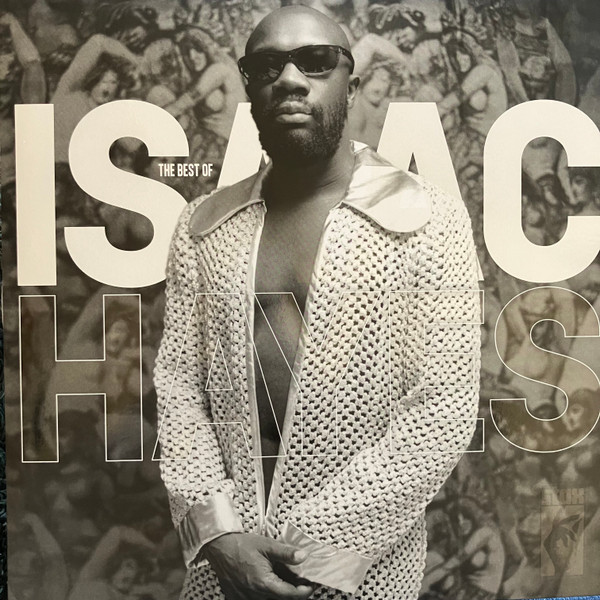
Labels: Stax / Craft Recordings · UPC: 888072675919 · Catalog: CRFLP67591
Format: Vinyl LP, compilation, 33⅓ RPM · Released: 6 June 2025 · Mastering: Paul Blakemore
Introduction
Few artists changed soul music as much as Isaac Hayes, and few did it twice. In the 1960s he was a backroom craftsman at Stax Records in Memphis. Working with lyricist David Porter, he co-wrote and produced classics for Sam & Dave, including “Soul Man” and “Hold On, I’m Comin’.” Then in 1969 he stepped out front with Hot Buttered Soul and broke every rule of the soul single.
His records were built on extended, orchestral reinterpretations of pop songs, often running more than 10 minutes. He opened them with long spoken “raps,” set them to sweeping strings, and sang in a deep baritone. Along the way he anticipated the slow jam, quiet storm, disco and hip-hop. With “Theme from Shaft” (1971) he became the first African American composer to win the Academy Award for Best Original Song.
This 2025 compilation from Craft Recordings takes an interesting approach: it collects the single versions of his biggest Stax-era hits on one LP. That’s both its main selling point and its biggest limitation, since Hayes was the master of the long form.
Track Listing
Side A
A1. Theme from Shaft (Hayes)
This is one of the most recognizable intros in recorded music: Willie Hall’s sixteenth-note hi-hat, then Charles “Skip” Pitts’s wah-wah guitar, then strings, horns and flute building over one hypnotic groove. Hayes’s spoken-sung exchange with the backing singers (“Shut your mouth!“) is a classic. It reached No. 1 on the Billboard Hot 100 in November 1971 and won the Oscar and a Grammy. It almost single-handedly established the sound of blaxploitation cinema.
A2. Walk On By (Bacharach/David)
On Hot Buttered Soul (1969), Hayes stretched Dionne Warwick’s breezy Bacharach hit into a 12-minute epic. It has fuzz guitar, a slow, heavy beat and huge strings. The single edit keeps the dramatic feel in a compact form. The full version is one of the most sampled tracks in hip-hop history, but even the edit shows how radically Hayes transformed pop songs.
A3. Never Can Say Goodbye (Clifton Davis)
Released by Hayes in 1971, the same year as the Jackson 5’s hit version, this appears on Black Moses. Hayes slows the song into a melancholy, adult ballad. It’s a striking contrast to the Jacksons’ youthful version.
A4. The Look of Love (Bacharach/David)
This is another Bacharach reinvention, from …To Be Continued (1970). The album version is a lavish, lengthy suite, and the edit concentrates it into a sensual, string-soaked ballad. It shows Hayes’s gift for drawing hidden depth out of familiar songs.
A5. Theme from The Men (Hayes)
This was a 1972 single written for an ABC television series. It’s a punchy, brassy, funky follow-up to Shaft, with similar wah-wah guitar and orchestral drama. It’s lesser known but a strong side closer, and it shows how Hayes’s cinematic sound became a template for 1970s TV themes.
Side B
B1. By the Time I Get to Phoenix (Jimmy Webb)
On Hot Buttered Soul, this became an 18-minute masterpiece. Hayes opens with a famous eight-minute spoken monologue explaining why the man in Jimmy Webb’s song left his wife, before the song itself even begins. The single edit is a very different experience. It cuts most of the rap and focuses on the melody, which makes it perfectly pleasant but loses what made the original revolutionary.
B2. Joy (Pt. 1) (Hayes)
This is the title track from Joy (1973). The full version runs about 15 minutes; here it’s the single’s “Part 1.” It’s a slow, sultry, bass-heavy groove with Hayes’s sensual murmuring and a wash of keyboards and strings. It’s one of his most sampled late-Stax recordings, and the source of countless 1990s hip-hop beats.
B3. Do Your Thing (Hayes)
On the Shaft soundtrack, this is a nearly 20-minute jam. The single edit is a lean, groovy piece of early 1970s soul-funk with a strong vocal and a memorable chorus. It was a modest pop hit in 1972.
B4. I Stand Accused (Jerry Butler/Billy Butler)
This is from The Isaac Hayes Movement (1970). It’s a cover of a Jerry Butler song about a man confessing his love for his best friend’s woman. The album version opens with one of Hayes’s most famous spoken raps. Even in edited form, it’s one of the album’s most emotionally powerful vocals.
B5. Wonderful (Hayes)
A non-album single and a nice rarity for anyone who only knows the big hits. It’s a warm, uplifting love song that closes the album on a lighter, optimistic note.
Details for Enthusiasts
About this edition
- Mastering: the album was newly remastered by Paul Blakemore, a GRAMMY-winning engineer and a regular on Concord/Craft reissues. The same remasters were released in standard digital, high-resolution digital and, for the first time for Hayes, Dolby Atmos.
- Single versions only: Craft’s press materials say the collection deliberately uses the single versions of his biggest hits. This lets all ten songs fit on one LP. The full album versions of “Walk On By,” “By the Time I Get to Phoenix,” “Joy,” “Do Your Thing” and “Look of Love” together would fill several records.
- Vinyl variants:
- Standard black vinyl, sold widely.
- “Red Smoke”, limited and exclusive to the official Stax Records store.
- “Electric Smoke”, limited and exclusive to Target.
- Manufacturing: retailers list it as made in the USA. Neither the lacquer-cutting engineer nor the pressing plant has been published. Check the runout etchings and back cover for cutting credits, since Craft releases often list them.
Original recording history
- Studio: most of Hayes’s classic material was recorded at Stax’s studio on East McLemore Avenue in Memphis, a converted movie theater. Some strings and horns were overdubbed elsewhere. Hot Buttered Soul was recorded partly at Ardent Studios in Memphis, and its strings were added in Detroit.
- Engineers: Stax staff engineers, notably Ron Capone and Henry Bush, recorded much of Hayes’s 1969–73 work. Terry Manning at Ardent is also associated with the Hot Buttered Soul sessions. The original album sleeves list the precise per-track credits, which vary from album to album.
- The band: Hayes was backed first by the Bar-Kays, rebuilt after the 1967 plane crash that killed Otis Redding and most of the original group. He later used his own Isaac Hayes Movement band, featuring guitarist Skip Pitts, drummer Willie Hall and others. On Hot Buttered Soul, the producers were Al Bell, Marvell Thomas and Allen Jones.
- The 1969 “Soul Explosion”: Hot Buttered Soul came out of a crisis. In 1968 Stax lost its back catalog to Atlantic Records after their distribution deal ended. To rebuild, label head Al Bell rushed out 27 albums at once in mid-1969. Hayes was given complete creative freedom, partly because nobody expected his album to sell. It became a multi-chart smash and helped rescue the label.
Hayes’s wider legacy
- “Black Moses”: after the 1971 double album of that name, Hayes adopted a striking persona of shaved head, sunglasses and gold-chain vest. It was one of the most powerful images of Black pride and masculinity in 1970s pop culture.
- Sampling: Hayes is among the most sampled artists in hip-hop. Public Enemy, Wu-Tang Clan, Notorious B.I.G., Portishead, Tupac and many others built tracks on his grooves.
- Later career: Stax collapsed into bankruptcy in 1975, and Hayes faced financial difficulties of his own. He later reinvented himself again as an actor, including in Escape from New York, and as the voice of Chef on South Park. He was inducted into the Rock and Roll Hall of Fame in 2002 and died in 2008.
Final Thoughts
As a single-LP introduction, The Best of Isaac Hayes does exactly what it promises. It gathers ten of his best-known songs in fresh remasters on one convenient record. “Theme from Shaft” alone justifies the purchase for a casual fan, and the inclusion of “Theme from The Men” and “Wonderful” adds some interest for completists.
But for an enthusiast, the format is a real compromise. Hayes’s genius was length. He used time, space, spoken monologues and slow-building arrangements to turn three-minute pop songs into soul symphonies. Hearing “By the Time I Get to Phoenix” without its legendary rap or “Walk On By” squeezed into single length is like seeing a cinema epic as a trailer.
Highlights: “Theme from Shaft,” “Walk On By,” “I Stand Accused,” “Joy (Pt. 1).”
Weakest moment: the “By the Time I Get to Phoenix” edit, simply because it loses what made the original great.