 Vinyl Review
Whitesnake (1987)
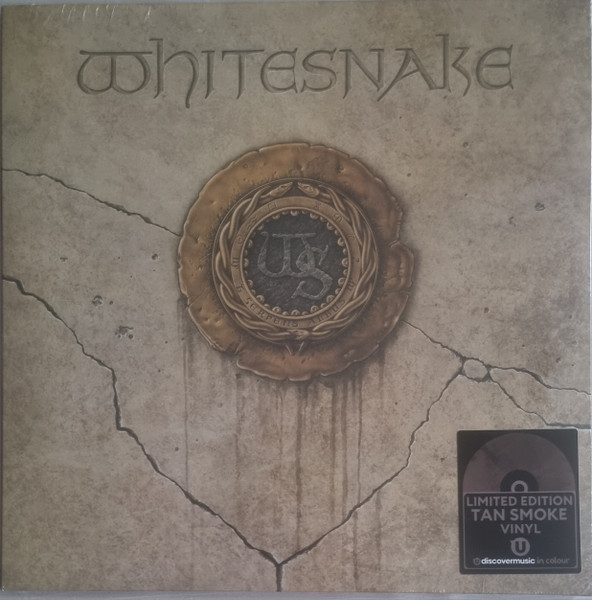
Tan Smoke Colour LP version used for the review for National Album day 2026
Released in Europe as 1987, in North America as Whitesnake
Label: EMI (UK/Europe), Geffen (North America) · Released: October 2026
Producers: Mike Stone and Keith Olsen
Introduction
Few albums mark a band’s reinvention as clearly as this one. Before 1987, Whitesnake was a British blues-rock band rooted in the Deep Purple tradition. It had loyal fans in the UK and Europe and almost none in America. When the album was finished, Whitesnake had become one of the biggest arena acts in the world. It had MTV saturation, a US number-one single, and eventually sales of well over ten million copies worldwide.
This marks the band’s genre shift around 1987, and this album is where it happened. That framing is only partly fair. The record has the big hair, slick production and power ballads of its era. Under the polish, though, it is a muscular, riff-driven hard rock album. Most of that weight comes from guitarist John Sykes, the album’s co-writer and its secret weapon. David Coverdale gives perhaps the best vocal performance of his career, and it’s remarkable given that he nearly lost his voice during the sessions.
Making the album was close to a disaster. It was delayed by illness, the producer was replaced partway through, the costs were huge, and the lineup fell apart. Almost none of the musicians who played on it appeared in the videos or on the tour that made it famous.
Track Listing
The two editions differ in running order and track count. The North American LP is listed first because it’s the best-known version.
North American edition (Geffen)
1. Crying in the Rain (Coverdale)
This is a re-recording of a song from Saints & Sinners (1982), and it shows the band’s transformation in one track. The original was a slow-burning blues lament. This version is heavier and denser, built on huge drums and Sykes’s crushing, harmonically rich riffing. His solo is one of the best on the album: fast, melodic and aggressive at once. It’s a bold choice for an opener on the US edition.
2. Bad Boys (Coverdale/Sykes)
This is the fastest, most metallic track on the record. Its galloping riff owes something to Sykes’s past in Thin Lizzy and Tygers of Pan Tang. Lyrically it’s pure 1987 swagger. Musically it’s relentless, and Aynsley Dunbar’s double-time drumming drives it hard. Fans have long noted that the riff resembles “Children of the Night,” and both reportedly came out of the same period of writing.
3. Still of the Night (Coverdale/Sykes)
This is the album’s masterpiece and one of the defining hard rock tracks of the decade. The roots of the riff go back to a demo Coverdale made in the Deep Purple era with Ritchie Blackmore. Sykes reworked it into a brutal, stop-start monster. The song is unashamedly Zeppelin-like: Coverdale’s high wail, the dynamic dropouts, and a hushed middle section with orchestral textures and bowed-guitar effects. Critics noticed the resemblance, and Robert Plant reportedly nicknamed the singer “David Coverversion.” Still, the track is too powerful to dismiss as imitation. Its video, directed by Marty Callner, introduced MTV to the “new” Whitesnake.
4. Here I Go Again (Coverdale/Marsden)
Co-written with former guitarist Bernie Marsden, this is another remake from Saints & Sinners. It became the band’s biggest hit and reached No. 1 on the Billboard Hot 100 in October 1987. The album version opens with a stately organ intro and builds into an anthem. Adrian Vandenberg, who joined late, plays the guitar solo. A separate, more radio-friendly “Radio Mix” was released as a single and is worth seeking out. It features session guitarist Dann Huff, has a different arrangement, and is generally considered more pop-leaning. The video features Tawny Kitaen doing cartwheels across two Jaguars, one of the defining images of 1980s MTV.
5. Give Me All Your Love (Coverdale/Sykes)
This is a compact, catchy rocker with a strong chorus and an easy groove. It’s one of the more conventional songs on the album, but the hooks are sharp. A remixed single version, with a solo by Vivian Campbell, was later released and given its own video.
6. Is This Love (Coverdale/Sykes)
This is the big power ballad, and it peaked at No. 2 on the Billboard Hot 100. It’s widely reported that Coverdale first wrote it with Tina Turner in mind before keeping it for Whitesnake. It’s tasteful by the standards of the genre, with a restrained verse, a soaring chorus and a beautifully phrased Sykes solo. Coverdale’s vocal is warm and controlled, a reminder that he’s a soul singer at heart.
7. Children of the Night (Coverdale/Sykes)
This is a speedy, riff-heavy track with a gang-vocal chorus and a gospel-influenced “children of the night” refrain. It’s one of Sykes’s showcases: tight, palm-muted riffing and blazing lead work. It’s underrated and a fan favorite in concert.
8. Straight for the Heart (Coverdale/Sykes)
This mid-tempo rocker is the album’s least memorable song. The sound is excellent, but the writing is more formulaic than elsewhere. The chorus works and Sykes’s playing is as strong as ever, but most listeners would call it filler by this album’s standards.
9. Don’t Turn Away (Coverdale/Sykes)
This is an atmospheric, keyboard-heavy closer with a big, cinematic feel. It’s less instantly gripping than the singles, but it ends the album on a dramatic, emotional note. Coverdale’s vocals are especially impassioned.
European edition (1987, EMI)
The European release, especially on CD and cassette, uses a different running order and adds two tracks:
- Still of the Night
- Bad Boys
- Give Me All Your Love
- Looking for Love (Coverdale/Sykes)
- Crying in the Rain
- Is This Love
- Straight for the Heart
- Don’t Turn Away
- Children of the Night
- Here I Go Again ’87
- You’re Gonna Break My Heart Again
“Looking for Love” is the important extra. It’s a dark, brooding, six-minute-plus mid-tempo song, and many fans consider it one of the best things Coverdale and Sykes wrote together. Its absence from the US edition is a notable omission. “You’re Gonna Break My Heart Again” is a more straightforward rocker.
Many fans prefer the European sequence for its flow. Opening with “Still of the Night” is an unbeatable statement of intent.
Recording History and Enthusiast Details
A long and troubled birth
- Writing began in 1985. Coverdale and Sykes worked together intensively, partly at Coverdale’s home near Lake Tahoe. Sykes was Coverdale’s main collaborator and is credited on most of the album.
- Sessions started at Little Mountain Sound Studios in Vancouver with Mike Stone producing. Stone was an engineer and producer known for his work with Queen, Journey and Asia. The basic rhythm tracks were recorded there, including Aynsley Dunbar’s drums.
- Coverdale’s health crisis: during the sessions, Coverdale developed a severe sinus infection, which led to a diagnosis of a deviated septum and surgery. Recovery took months, and it was uncertain whether his voice would fully return. This caused a long delay, which is part of why the album took so long and cost so much.
- Producer change: Coverdale and Stone parted ways during the project, and Keith Olsen stepped in to finish it. Olsen was known for Fleetwood Mac’s Buckingham Nicks, Pat Benatar, Foreigner and Ozzy Osbourne. Olsen is widely credited with the album’s final glossy, huge-sounding mix. Work continued in several locations, reportedly including Compass Point Studios in Nassau, Bahamas, and Los Angeles studios, among them Olsen’s own Goodnight LA facility in Van Nuys.
- Engineering: Mike Stone and Keith Olsen both did substantial engineering on the record, alongside assistant engineers at the various studios. Engineering credits differ between pressings and sources, so check the liner notes of your edition for the full list.
The musicians who actually played on it
- David Coverdale: vocals
- John Sykes: guitars (nearly all of them) and backing vocals
- Neil Murray: bass
- Aynsley Dunbar: drums. He’s a veteran of Frank Zappa, Journey and Jefferson Starship.
- Don Airey: keyboards. He’s a future Deep Purple member.
- Bill Cuomo: keyboards
- Adrian Vandenberg: guitar solo on “Here I Go Again”
- Dann Huff: guitar on the “Here I Go Again” Radio Mix
The great lineup purge
In one of rock’s most famous ironies, Coverdale dismissed almost the entire band before the album came out. Most notably, he fired John Sykes, the man most responsible for its sound. The two had reportedly fallen out over creative control and personal tensions. Murray and Dunbar also left.
The new lineup appeared in the videos and on the world tour:
- Adrian Vandenberg: guitar
- Vivian Campbell: guitar (formerly of Dio, later Def Leppard)
- Rudy Sarzo: bass (Quiet Riot, Ozzy Osbourne)
- Tommy Aldridge: drums (Ozzy Osbourne, Black Oak Arkansas)
This “supergroup” image matched the MTV era perfectly. But fans watching the videos were seeing musicians who were miming parts played by others.
Sykes went on to form Blue Murder with Tony Franklin and Carmine Appice. Its 1989 debut sounds a lot like where 1987 might have gone next.
The videos and Tawny Kitaen
Marty Callner directed the trilogy of “Still of the Night,” “Here I Go Again” and “Is This Love.” They starred actress Tawny Kitaen, who married Coverdale in 1989. They’re among the most heavily played videos in MTV history, and they arguably did as much for the album’s success as the music did.
Artwork
The cover shows a striking stylized snake emblem on a dark background. It was created by Hugh Syme, the designer best known for his long partnership with Rush. It’s one of the most recognizable hard rock covers of the decade.
Chart performance and sales
- US Billboard 200: peaked at No. 2, and stayed near the top for a long run.
- UK Albums Chart: peaked at No. 8.
- RIAA certification: 8× Platinum in the US.
- Singles: “Here I Go Again” (US No. 1), “Is This Love” (US No. 2, UK No. 9), “Still of the Night” (UK No. 16) and “Give Me All Your Love.”
- Estimated worldwide sales: over 10 million copies.
Reissues for collectors
- 20th Anniversary Edition (2007): a remaster with bonus material, including a DVD of videos and live performances.
- 30th Anniversary Edition (2017, Rhino/Parlophone): the most comprehensive set. It includes new remasters, the “Evolutions” disc tracing songs from demo to finished take, early demos with Sykes, live recordings from the 1987–88 tour, and rough mixes. It’s essential for anyone interested in how the album was built.
- Original pressings: collectors debate the merits of early Geffen and EMI vinyl. Many prefer original pressings for their dynamics, compared with the louder, more compressed remasters of the 2000s. Early Japanese CD pressings are also prized.
- Spot the edition: the presence of “Looking for Love” and the sequence opening with “Still of the Night” identify European editions.
Interesting trivia
- In 1994, Geffen’s Greatest Hits compilation helped revive the album’s catalog. The songs have since appeared widely in film, TV and video games, including the Guitar Hero and Grand Theft Auto franchises. “Here I Go Again” became a pop-culture staple all over again.
- The comparisons with Led Zeppelin followed Coverdale for years. Ironically, he later collaborated with Jimmy Page on Coverdale–Page (1993).
- In 2020 Coverdale released The Rock Album, a remixed collection from the Whitesnake catalog that included reworked versions from this era, and fans debated it heavily.
- The album’s success made Coverdale wealthy enough to recover from the financial strain of the sessions, which had reportedly come close to ruining him.
Final Thoughts
1987 is that rare thing: a calculated commercial makeover that is also a great record. Yes, it’s dated by its glossy production and big hair, and yes, its Zeppelin worship is shameless. But the songwriting is strong, the playing is ferocious, and Coverdale’s vocals are spectacular, especially considering he recorded them after throat and sinus surgery.
The real hero is John Sykes. His riffs, tone and solos give the album weight that much of its glam-metal competition lacked. The fact that he was fired before release, and that strangers mimed his parts on MTV, is one of rock history’s great injustices.
Highlights: “Still of the Night,” “Crying in the Rain,” “Is This Love,” “Here I Go Again” and, if you have the European edition, “Looking for Love.”
Weakest moment: “Straight for the Heart.”
Rating: 4.5 / 5. It’s an essential hard rock album of the 1980s, and Whitesnake’s commercial and arguably creative peak. Enthusiasts should get the 30th Anniversary Edition for the demos and evolution tracks, and track down the European sequence for the best listening experience.