 Vinyl Review
Talk Talk — The Party’s Over (1982)
Label: EMI · Producer: Colin Thurston · Released: July 1982
Introduction
Few bands have travelled as far as Talk Talk did. By the end of their career they had made Spirit of Eden (1988) and Laughing Stock (1991), quiet, mostly improvised masterpieces that helped invent post-rock. But it started here, with a synth-pop debut on EMI that came out the same year and on the same label as Duran Duran, and with the same producer.
At the time, The Party’s Over got Talk Talk dismissed as Duran Duran imitators. Even the band name sounded like a New Romantic act. Listening now, the album sounds more interesting than that label suggests. Mark Hollis‘s yearning, cracked vocals, the band’s melancholy, and the minor-key moodiness are all present. You can hear the seeds of the band they were to become.
Track Listing
Side One
1. Talk Talk
A re-recording of a song by Hollis’s earlier band, The Reaction, originally called “Talk Talk Talk Talk.” It’s a jittery, catchy new wave single with sharp synths and Hollis’s anxious vocal. It became their signature early hit. It charted in the UK and reached the US Hot 100, giving them their first taste of success abroad.
2. It’s So Serious
A brisk, slightly brittle synth-pop song with a strong chorus. It’s typical of early-1980s new wave, but Hollis’s voice gives it real emotional weight.
3. Today
The album’s biggest UK hit, reaching the Top 20 in summer 1982. It’s bright and anthemic, with an upbeat, almost optimistic sound that’s unusual for the band. It’s the closest they came to true mainstream pop.
4. The Party’s Over
The title track is the album’s highlight. It’s slow, brooding and melancholy, with a long, spacious arrangement and a heartfelt vocal. Its sadness and patience point directly towards what the band would become. If you only listen to one song on the album, make it this one.
Side Two
5. Hate
A darker, tense song with a restless rhythm. It’s one of the album’s lesser-known tracks but has real atmosphere.
6. Have You Heard the News?
A slow, moody, dramatic song with a big, ominous synth sound and one of Hollis’s most anguished vocals. It’s another track that hints at the later Talk Talk.
7. Mirror Man
Their first EMI single, released in early 1982. It’s a quirky, upbeat new wave song with jerky rhythms. It didn’t chart, and it’s fun, but it’s the most lightweight track here.
8. Another Word
A punchy, energetic song, and another strong deep cut, with prominent bass from Paul Webb.
9. Candy
A gentle, wistful closer with a spacious, reflective mood. It’s a lovely, quiet ending and another sign of the direction they would later take.
Recording and Enthusiast Details
The band
- Mark Hollis: vocals and songwriting.
- Paul Webb: bass. He later worked with Beth Gibbons of Portishead as Rustin Man.
- Lee Harris: drums. Webb and Harris later formed .O.rang.
- Simon Brenner: keyboards. He left after this album and was effectively replaced by Tim Friese-Greene, who became Hollis’s main collaborator from It’s My Life (1984) onwards and was crucial to their later sound.
Production
- Producer: Colin Thurston. He was best known for producing Duran Duran’s first two albums, and before that for engineering David Bowie’s “Heroes” and Iggy Pop’s Lust for Life. His involvement fuelled the Duran Duran comparisons. EMI clearly saw Talk Talk as a band in the same mould, and they toured as Duran Duran’s support act in 1981.
- Studio: recorded in London. Studio credits are inconsistent between editions, so check the sleeve of your copy.
- Hollis’s family connection: his elder brother Ed Hollis was a manager and producer on the punk scene, working with Eddie and the Hot Rods. He encouraged Mark’s early music career, and his record collection, including jazz and classical, deeply influenced Mark’s later direction.
The cover
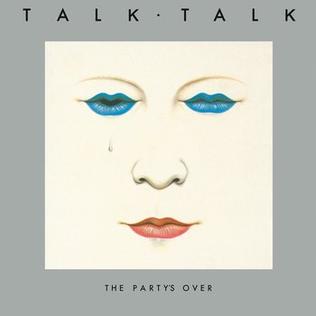
The artwork is by James Marsh, who designed every Talk Talk cover. His surreal, colourful illustrations, often featuring birds, trees and natural imagery, give the band’s catalog a consistent visual identity, even as the music changed enormously.
What came next
- It’s My Life (1984) brought bigger international success, especially in Europe, with the title track and “Such a Shame.” No Doubt’s 2003 cover of “It’s My Life” was a worldwide hit.
- The Colour of Spring (1986) was their commercial peak, with “Life’s What You Make It.”
- Spirit of Eden (1988) and Laughing Stock (1991) were made through long, improvised sessions in near darkness. They puzzled EMI and led to a bitter legal dispute, but they are now considered among the most influential albums of their era.
- Mark Hollis released one solo album in 1998 and then retired from music completely. He died in February 2019, and many musicians, from Elbow to Radiohead admirers, paid tribute to him as a singular artist.
Pressings
- Original 1982 EMI pressings are common and inexpensive. They’re well made, so look for clean copies with the original inner sleeve.
- Later reissues exist on vinyl and CD, but the early albums have been reissued less often and less lavishly than Spirit of Eden and Laughing Stock. Check the edition and mastering details before you buy.
- Hollis’s view: he was famously uninterested in this early period. This record doesn’t have the reverence among collectors that the later albums do, which makes it a cheap buy.
Final Thoughts
The Party’s Over is a product of its time: synth-heavy, polished and obviously shaped by EMI’s hopes of another Duran Duran. Some songs, especially “Mirror Man,” are slight, and the production now sounds dated.
But it’s better than its reputation. Hollis’s voice is already remarkable, and the title track, “Have You Heard the News?” and “Candy” show a depth and melancholy that set Talk Talk apart from their peers. It’s a fascinating starting point for one of the most remarkable transformations in rock history.
Highlights: “The Party’s Over,” “Talk Talk,” “Today,” “Have You Heard the News?”
Weakest moment: “Mirror Man.”