 Vinyl Review
The Rolling Stones — Sticky Fingers (1971)
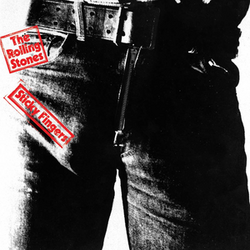
2018 half-speed master reissue · Label: Rolling Stones Records / Polydor / UMC · Mastering: Miles Showell, Abbey Road · Pressing: 180g, made in France (MPO for the box set)
Introduction
By 1971 the Rolling Stones had come through the darkest period of their career. Brian Jones had died in July 1969. The Altamont concert that December ended with a fan stabbed to death in front of the stage. And their contract with Decca and Allen Klein’s ABKCO had ended badly, with the band discovering it no longer controlled its own 1960s recordings.
Sticky Fingers was the answer to all of that. It was the first album on their own label, Rolling Stones Records, and the first to carry John Pasche’s famous tongue-and-lips logo. It was also the first full studio album with guitarist Mick Taylor. It’s loose, sleazy, soulful and dark, and it begins the run that many fans consider the Stones’ peak, alongside Exile on Main St. the following year.
It reached No. 1 in both the UK and the US.
Track Listing
Side One
1. Brown Sugar
One of rock’s great opening riffs. It was cut at Muscle Shoals Sound Studio in Alabama in December 1969, just days before Altamont. Bobby Keys plays the saxophone solo. It went to US No. 1, but the lyrics, which mix slavery, sex and drugs, have made it increasingly controversial. The band dropped it from their live set in 2021.
2. Sway
A heavy, dragging, druggy blues-rocker with one of Mick Taylor’s best solos. Keith Richards doesn’t play on it, and Mick Jagger plays rhythm guitar. Pete Townshend and Ronnie Lane sing backing vocals, and Paul Buckmaster arranged the strings.
3. Wild Horses
Also recorded at Muscle Shoals. It’s a beautiful, aching country-soul ballad with Keith’s twelve-string guitar and Jim Dickinson on piano. Gram Parsons, Keith’s close friend at the time, was a major influence on its sound. His Flying Burrito Brothers released a version before the Stones did.
4. Can’t You Hear Me Knocking
It starts with Keith’s opening riff in open-G tuning, one of his greatest. The song then unexpectedly turns into a seven-minute Latin-jazz jam with Bobby Keys on sax, Rocky Dijon on congas, Billy Preston on organ, and Mick Taylor playing a long, fluid solo. The band reportedly didn’t know the tape was still rolling, and kept the jam. It’s the album’s highlight.
5. You Gotta Move
A spare, swampy cover of the traditional gospel blues, best known from Mississippi Fred McDowell’s version. Also recorded at Muscle Shoals.
Side Two
6. Bitch
A punchy, horn-driven rocker, with Bobby Keys and Jim Price on horns. It’s one of the album’s most energetic tracks and was the B-side of “Brown Sugar.”
7. I Got the Blues
A slow Stax-style soul ballad, with Billy Preston’s church organ and an impassioned Jagger vocal. It’s an underrated gem.
8. Sister Morphine
A harrowing song about addiction and a dying man in hospital. Marianne Faithfull co-wrote it and recorded her own version in 1969, but she was only credited on later editions. Ry Cooder‘s slide guitar and Jack Nitzsche‘s piano make it one of the darkest recordings the Stones ever made.
9. Dead Flowers
A wry country pastiche with a heroin punchline. Like “Wild Horses,” it shows the Parsons influence. Townes Van Zandt later covered it, and his version plays over the closing credits of The Big Lebowski.
10. Moonlight Mile
A gorgeous, slow-burning closer about the loneliness of touring, with Paul Buckmaster’s sweeping strings. Keith doesn’t play on it either, and Mick Taylor helped shape the music. It’s one of the most beautiful songs the Stones recorded.
Recording and Enthusiast Details
Studios
- Muscle Shoals Sound Studio, Alabama (December 1969): “Brown Sugar,” “Wild Horses” and “You Gotta Move.”
- Olympic Studios, London: much of the rest.
- Stargroves: Mick Jagger’s country house in Hampshire, recorded using the Rolling Stones Mobile Studio, which later recorded Led Zeppelin and Deep Purple.
People
- Producer: Jimmy Miller, who produced the Stones’ classic run from Beggars Banquet to Goats Head Soup.
- Engineers: Glyn Johns, his brother Andy Johns and Chris Kimsey at the London sessions. At Muscle Shoals, the studio’s own Jimmy Johnson engineered.
- Guest musicians: Bobby Keys, Jim Price, Billy Preston, Nicky Hopkins, Ian Stewart, Jack Nitzsche, Ry Cooder, Rocky Dijon, Jim Dickinson and Paul Buckmaster.
The cover
The concept was by Andy Warhol, and Craig Braun designed it. Its famous close-up of a man’s crotch in tight jeans had a real working zipper. Underneath, the inner sleeve showed the model in underwear. The model’s identity has been endlessly debated. Several members of Warhol’s Factory circle were photographed, and actor Joe Dallesandro is the most frequently named candidate.
The zipper reportedly damaged records stacked against it in shops and warehouses, so later editions sometimes pulled the zip down to the middle to avoid pressing into the next record. In Spain, Franco-era censors rejected the cover and it was replaced with a picture of fingers in a can of treacle. That edition also replaced “Sister Morphine” with a live version of Chuck Berry’s “Let It Rock.”
About the 2018 Pressing
- Origin: the half-speed master first appeared in the 2018 Studio Albums Vinyl Collection 1971–2016 box set. Individual albums were later issued separately, and Sticky Fingers was among the last to appear on its own.
- Mastering: Miles Showell cut the lacquers at half speed at Abbey Road, from tape transfers made specifically for vinyl. He’s the engineer behind the Tubular Bells half-speed master I mentioned in that review.
- Pressing: heavyweight 180g vinyl, made in France. Analog Planet reports that MPO pressed the box set, but says not every standalone half-speed was pressed there.
- Sound: Analog Planet felt the 2018 half-speeds captured the spirit of the original LPs better than other modern reissues, while sometimes lacking “transparent analog sparkle.” Vinyl Reviews reports Showell’s view that the cut brings out more of the low end. You’ll hear that in the kick drum and bass on “Brown Sugar” and “Bitch.”
- Packaging: retailers note the packaging was simplified compared with the originals. Check whether your copy has the full working zipper and the inner underwear sleeve, since that’s a big part of this album’s charm.
- How it compares:
- Original 1971 UK and US pressings (Rolling Stones Records COC 59100 in the UK) remain the collector’s choice, but clean copies with an undamaged zipper are increasingly expensive.
- The 2015 deluxe reissue, with the Bob Ludwig remaster and bonus material, is the alternative if you want the extra tracks, including an alternate “Brown Sugar” featuring Eric Clapton and live recordings.
- The 2018 half-speed sits between the two: modern, quiet, faithful to the original sound and relatively affordable.
Final Thoughts
Sticky Fingers is the Stones at their most decadent and soulful. It moves from rock to country to blues to soul without ever losing its identity. “Can’t You Hear Me Knocking,” “Wild Horses” and “Moonlight Mile” are among the best things they ever recorded. “Brown Sugar” still has one of rock’s greatest riffs, even if its lyrics have aged badly.
Highlights: “Can’t You Hear Me Knocking,” “Wild Horses,” “Moonlight Mile,” “Sway.”
Weakest moment: “You Gotta Move” is fine, but it’s slight next to everything else.
On the 2018 pressing: if you want a quiet, well-mastered modern copy, the half-speed is a strong choice, and the low end in particular is excellent. A clean original 1971 pressing still has the edge in excitement and authenticity, but it costs much more.