 Vinyl Review
Living With the WiiM Ultra + Vibelink Amp: A Long-Term Take
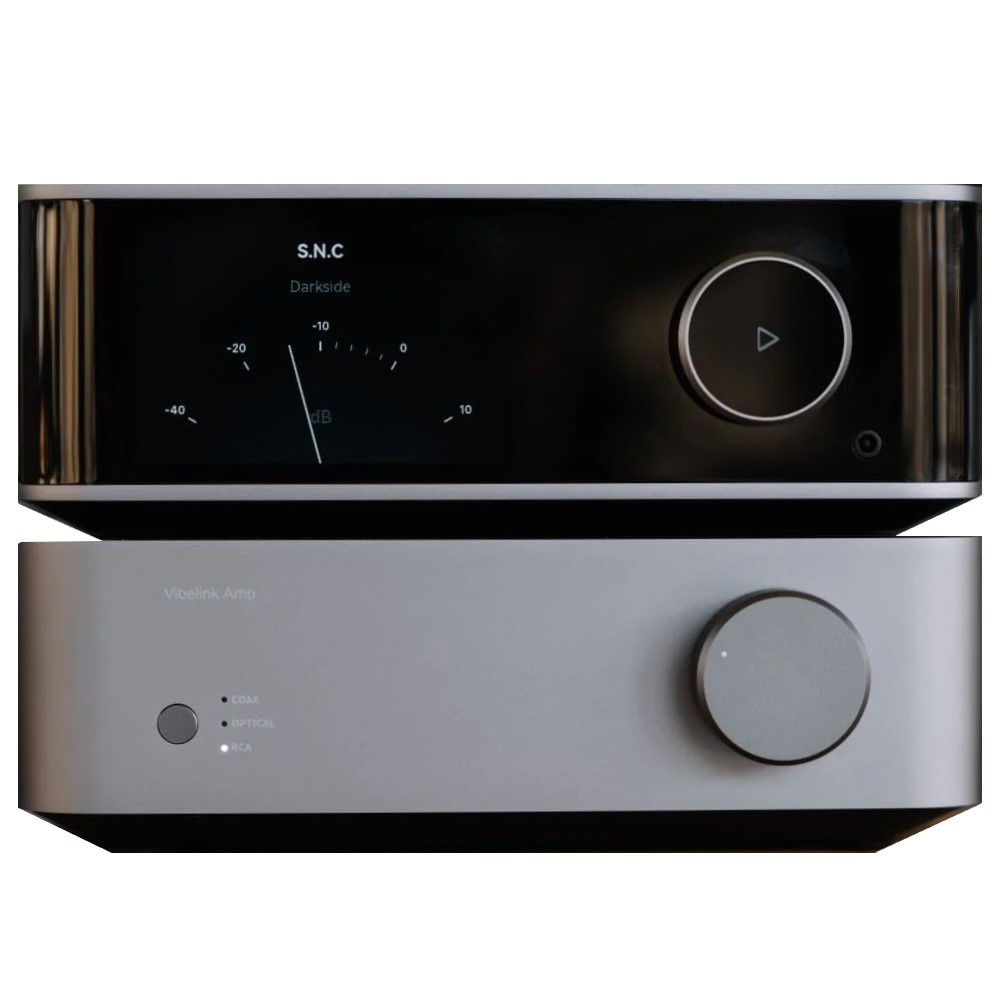
I’ve been at this hobby a while now. Long enough to have owned a turntable that cost more than my first car, to have argued on forums about whether power cables matter, and to have rebuilt my system from scratch more times than I’d like to admit to my spouse. So when I say that a pair of reasonably priced boxes from WiiM has become the centre of my main listening setup, understand that I didn’t get here easily, and I didn’t get here without being skeptical first.
This is a long review, because a short one wouldn’t do this system justice and because the way I’ve configured it is a bit unusual. If you’re the type who reads the whole thing before buying, pour something nice and settle in.
Why I Even Looked at WiiM
For month my digital front end was a cobbled-together arrangement: a laptop running a music server, a separate USB DAC, a streamer for the services, and a spaghetti of cables and apps that only I knew how to operate. It sounded good. It was also fragile, ugly, and impossible for anyone else in the house to use.
I’d heard the buzz about WiiM’s earlier streamers, but I mentally filed them under “great value for people getting into the hobby.” Not for me, I thought. Then the Ultra arrived with a proper touchscreen, a serious feature set, and a build quality that frankly embarrassed some of the far pricier gear on my rack. Around the same time I started reading about the Vibelink Amp, and the idea of a compact, matched pairing that could replace three or four boxes was too tempting to ignore.
I bought both. I’ve now lived with them long enough to have real opinions.
My Setup (and Why It’s Configured This Way)
Before I talk sound, let me lay out exactly how I’m running this, because it matters.
- The WiiM Ultra is the brains: the streamer, the control hub, the thing everything flows through.
- The WiiM Vibelink Amp does the amplification and, importantly, the digital-to-analog conversion.
- The two are connected by optical (Toslink) from the Ultra’s digital output into the Vibelink.
- My library of more than 2,500 digital files is served through Plexamp, which casts directly to the Ultra.
- An Apple TV running the WiiM app gives me a big-screen interface and access to more features and content.
The key decision here is the optical link. The Ultra has a perfectly respectable DAC of its own, and plenty of people will simply run its analog outputs into the Vibelink and call it a day. I tried that first, and it’s good. But after extended back-and-forth listening, I came to prefer the Vibelink’s internal DAC. By sending a clean digital signal over optical, I let the Ultra do what it does best (streaming, library management, control, the user experience) and let the Vibelink handle conversion and amplification in one tightly integrated path. Fewer analog interconnects and fewer conversion stages, with the DAC sitting right next to the amp it feeds.
That’s the philosophy, anyway. Here’s how it actually plays out.
The WiiM Ultra: The Command Centre
Build and Design
The first thing you notice is the screen. It sounds like a gimmick until you live with it. Album art in the corner of the room, track info at a glance, and the ability to change inputs or presets without hunting for my phone. It turned a “component” into something that feels like an instrument panel for my music.
The chassis is solid and the controls feel deliberate, not cheap. The volume knob has a pleasing weight to it. It doesn’t scream “budget,” and it sits comfortably next to gear costing several times more.
Connectivity
The Ultra is almost absurdly well-equipped. Digital outputs, analog outputs, HDMI ARC for the TV, a phono stage for those of us who still spin vinyl, subwoofer out, and all the wireless protocols you’d expect. In my system I’m using it as a pure digital transport and phono stage, but it’s reassuring to know the flexibility is there if I reconfigure later.
The Software Experience
This is where WiiM has quietly lapped a lot of the “prestige” brands. The WiiM Home app is responsive, stable, and keeps getting updated. Room correction, EQ, input management, presets, multi-room grouping: it’s all there and it actually works. I’ve used streamers from boutique companies whose apps felt like an unfinished student project. WiiM’s software feels like it was built by people who use it every day.
Plexamp + 2,500 Files: Where This System Really Sings
This is the part I was most nervous about, and the part that has made me happiest.
My library is the product of decades of collecting: ripped CDs, hi-res downloads, obscure live recordings, out-of-print albums I’d never find on a streaming service. More than 2,500 files, all carefully tagged, living on my Plex server. For me, Plex and Plexamp have long been the best way to explore a personal library. Smart mixes, artist radio built from your own collection, and a level of metadata polish that streaming services rarely match for local files.
Plexamp’s integration with the Ultra means I pick music in Plexamp and the Ultra plays it natively. No awkward phone-as-a-bridge Bluetooth compromise, no AirPlay resampling to worry about. It just shows up on the Ultra and plays, album art and all, right on that front screen.
What I love most:
- Rediscovery. Plexamp’s mixes and radio features have surfaced albums I forgot I owned. On a library this size, that’s genuinely valuable.
- Gapless playback behaves the way it should. Live albums and concept records flow as intended.
- Stability. Long listening sessions without dropouts or the app losing track of what’s playing.
- It feels like my collection, not an algorithm’s idea of what I should hear.
If you have a serious local library and you’ve been frustrated by streamers that treat local files as an afterthought, this combination may be the answer you’ve been looking for.
The Apple TV + WiiM App: The Bonus Layer
I didn’t expect to care about this, but the Apple TV running the WiiM app has become a regular part of how I use the system.
Having the interface on the big screen changes the experience. Browsing album art at television scale, queuing up music for guests without handing them my phone, and getting at extra features and content from the couch makes the system feel more like a proper home entertainment hub and less like a hobbyist’s rig. When friends come over, they can actually use it. That’s no small thing.
It also opens the door to more content and services alongside my Plex library, so the system covers both deep-library listening and casual “put something on” evenings without switching gear or apps around.
The WiiM Vibelink Amp: The Heart of the Sound
First Impressions
The Vibelink Amp is compact. Almost suspiciously so if you’re used to traditional amplifiers with transformers that weigh as much as a small dog. But modern amplification has changed, and the Vibelink proves that size no longer tells you much about capability.
It’s well finished, runs cool in my experience, and pairs visually with the Ultra in a way that makes the two look like they were designed as a set, because they were.
Why I Use Its DAC
I want to dwell on this, because it’s the most “audiophile” decision in my setup.
When I compared the Ultra’s analog outputs into the Vibelink against the Ultra’s optical output feeding the Vibelink’s own DAC, the difference wasn’t night and day, and I’d be lying if I said it was. But it was consistent, and it was in the direction that matters to me.
Through the Vibelink’s DAC, I hear:
- A slightly more relaxed, natural top end. Cymbals have shimmer and decay without edge. Long sessions are less fatiguing.
- Better coherence. Conversion and amplification feel like one continuous gesture rather than two stages handing off to each other.
- A touch more body in the midrange. Vocals especially gained a sense of physical presence. Small, but once I noticed it, I couldn’t un-hear it.
Is part of that the shorter analog path? Probably. Is part of it the specific tuning of the Vibelink’s conversion stage? Almost certainly. Either way, the result made me commit to the optical approach.
A Note on Optical
Experienced listeners will raise an eyebrow at Toslink, so let me address it. Optical has its limitations. It typically tops out around 24-bit/192kHz, and some people have strong feelings about jitter. In practice, for the overwhelming majority of my library, those limits are a non-issue. Most of my files sit at or below those rates anyway. The galvanic isolation optical provides (no electrical connection between the two boxes) is a quiet benefit that’s easy to overlook. My noise floor is dead silent, with no ground hum and no hash between tracks.
If you’re running a lot of very high-sample-rate or DSD material, you’ll want to think about this more carefully. For a real-world library like mine, optical has been completely transparent to my ears.
The Sound, Track by Track
Specs and philosophy are fine, but what actually matters is how music sounds. Here are some impressions from long sessions.
Acoustic and vocal recordings. This is where the system shines brightest. Well-recorded female vocals come through with a lovely natural warmth and plenty of breath and texture, and no hint of sibilance. Acoustic guitar has the pluck, the body resonance, and the little finger noises that make it feel real.
Jazz. Small-group jazz is a joy. The stage has good width, and instruments sit in their own space. Upright bass is articulate rather than a vague bloom, and you can follow the bass line, which is not a given at this price. Brushed snare has that delicate, airy quality.
Classical and orchestral. Large-scale works are the toughest test for compact gear. The Vibelink holds together better than I expected. Dynamic swings are handled with composure, and crescendos don’t congest or harden. It won’t give you the sheer authority of a massive monoblock setup, but it never sounds strained within sensible listening levels.
Rock and electronic. Drive, punch, and timing are all good. Kick drums have impact, and electronic tracks with deep sub-bass content are delivered with control. With my speakers, I haven’t felt the need for more grunt, though owners of very inefficient speakers should pay attention to the power question.
Older and lesser recordings. One sign of a well-balanced system is that it doesn’t punish imperfect recordings. Some of my older rips and live bootlegs sound more enjoyable here than on more “ruthlessly revealing” setups I’ve owned. That’s a feature, not a flaw. I want to listen to my music, not audit it.
Living With It Day to Day
A system can sound wonderful and still be a pain to live with. This one isn’t.
- Startup and wake are quick and reliable.
- Everyone in the house can use it. Screen, app, Apple TV, Plexamp: there’s an obvious way in for everyone.
- Firmware updates have improved things over time rather than breaking them, which is more than I can say for some past gear.
- Rack footprint shrank dramatically. Two compact boxes replaced a stack of components and a nest of cables.
My wife, who has tolerated my audio obsession with patient eye-rolling, has said this is the first system I’ve owned that “just works.” I’ll take that as the highest praise available.
The Criticisms (Because There Are Always Some)
No review is honest without them.
- Optical is a ceiling, not a floor. For most libraries it’s irrelevant, but if you’re a heavy hi-res or DSD collector, my optical-to-Vibelink approach may not suit you, and you’ll want to explore other connections.
- Power has limits. The Vibelink is impressive for its size, but very demanding, low-sensitivity speakers in a large room may ask more of it than it wants to give. Match your speakers sensibly.
- Feature overload. The Ultra does so much that the first week involves a fair bit of menu exploration. Not a flaw exactly, but beginners might feel overwhelmed.
- The upgrade itch doesn’t disappear. Being an audiophile, I still occasionally wonder “what if.” That’s a me problem, not a WiiM problem.
Value: The Elephant in the Listening Room
I’ve spent embarrassing sums on audio this last year. The uncomfortable truth this pairing forced on me is that a lot of that money bought diminishing returns, prestige, and heavier boxes.
The WiiM Ultra and Vibelink Amp together cost a fraction of what many single components on my previous racks did. They don’t beat every high-end system ever made, and anyone claiming otherwise is selling something. But the distance between this system and gear costing many times more is far smaller than the price difference suggests. Factor in the software, the convenience, the Plexamp integration, and the Apple TV experience, and the value case is overwhelming.
Final Verdict
The WiiM Ultra and Vibelink Amp have done something I didn’t think a “value” brand could do: they’ve earned a permanent place in a serious audiophile’s main system.
The Ultra is the best streaming hub I’ve used at any price for day-to-day living. Its integration with Plexamp has given my 2,500-plus file library a new lease on life, and the Apple TV with the WiiM app turns the whole thing into a shared, accessible home music system rather than a hobbyist’s private toy.
The Vibelink Amp, fed over optical and doing its own digital-to-analog conversion, delivers a sound that is natural, coherent, quiet, and deeply musical. It’s the kind of sound that makes you forget about equipment and pull out one more album at midnight.
Is it the last system I’ll ever own? I’m an audiophile, so I’d never promise that. But for the first time in a long time, I’m spending my evenings listening to music instead of thinking about what to change next.
Highly recommended, especially if you have a substantial local library and want a system the whole household can enjoy without giving up the sound quality that brought you to this hobby in the first place.