 Vinyl Review
Igor Stravinsky / Roger Waters / Bridgehampton Chamber Music Festival — The Soldier’s Tale
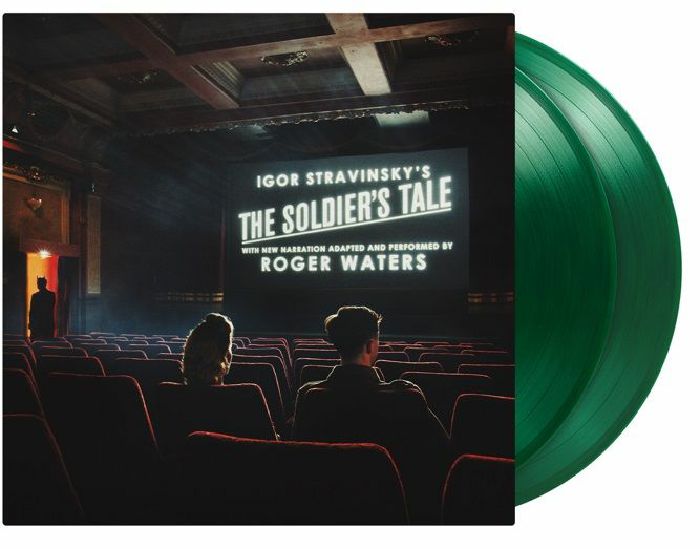
With new narration adapted and performed by Roger Waters
This copy: Music On Vinyl / Sony Classical MOVCL050 · 2LP, 180g green vinyl · Limited, numbered edition · Europe · Released 6 November 2026
Bought from: RareVinyl.com, as an impulse purchase
Originally released: 2018, Sony Classical
Why I Bought It
This one wasn’t planned. I was browsing RareVinyl.com, came across it, and bought it on impulse, out of pure curiosity. Roger Waters narrating a Stravinsky theatre piece about a soldier who makes a deal with the Devil? I had to hear what that sounded like.
It’s not the kind of record I’d usually go looking for, and that’s half the appeal. Sometimes the best purchases are the ones you didn’t mean to make.
What It Is
In 1918, at the end of the First World War, Igor Stravinsky was in exile in Switzerland, cut off from his income by the war and the Russian Revolution. With the Swiss writer C. F. Ramuz, he created L’Histoire du soldat (The Soldier’s Tale), a small, portable piece of music theatre for three actors, a dancer and seven musicians. It was meant to tour cheaply from village to village.
The story is based on a Russian folk tale. A soldier named Joseph, walking home on leave, meets the Devil, who persuades him to swap his fiddle for a magic book that predicts the future. Joseph becomes rich but loses everything that matters. It’s a parable about greed, temptation and the impossibility of having everything.
For Roger Waters, it’s a natural fit. His father was killed in the Second World War, and war has haunted his work from The Wall to The Final Cut. He rewrote the text as a new English narration and voiced every speaking part himself: the Narrator, the Soldier and the Devil. He recorded it with musicians from the Bridgehampton Chamber Music Festival on Long Island, New York.
The Music
Stravinsky wrote for a tiny ensemble, a bit like a village band, with a high and low instrument from each section of the orchestra:
- Strings: violin and double bass
- Woodwinds: clarinet and bassoon
- Brass: cornet and trombone
- Percussion: one player
The score is spiky, witty and restless, full of jazz and ragtime rhythms, tango, waltz, marches and Bach-style chorales. The violin represents the soldier’s soul.
The main sections
Part One
- The Soldier’s March: a jaunty, off-kilter march as Joseph walks home.
- Airs by a Stream: Joseph plays his fiddle by a stream, and the Devil, disguised as an old man, appears.
- Pastorale: a strange, melancholy interlude.
Part Two
- The Royal March: a pompous, comic march as Joseph arrives at a palace where the king has promised his daughter to whoever can cure her.
- The Little Concert: a busy, lively ensemble piece.
- Three Dances: Tango, Waltz, Ragtime: Joseph cures the princess with his fiddle. It’s the most famous part of the score.
- The Devil’s Dance: frantic and wild, as Joseph’s fiddle makes the Devil dance until he drops.
- The Little Chorale and The Great Chorale: solemn, hymn-like pieces.
- The Devil’s Song: the Devil’s warning that you can’t have it all.
- Triumphal March of the Devil: a terrifying finale that ends with the percussion alone as the Devil claims Joseph.
Waters’s narration runs between and over the music, telling the story.
Enthusiast Details
- Premiere: Lausanne, Switzerland, 28 September 1918, conducted by Ernest Ansermet. The planned tour was cancelled when the Spanish flu pandemic swept through Switzerland.
- Famous narrators: the piece has had many over the years, including Jean Cocteau and, on record, Christopher Lee and Sting.
- Waters’s version: he first performed it with the Bridgehampton musicians in 2014–2015, and the recording was released by Sony Classical in 2018. Critics praised the musicians and Waters’s theatrical commitment, though some felt his voice and political edge dominated the piece.
- Music On Vinyl: a Dutch specialist reissue label known for 180g, limited, numbered coloured-vinyl editions. Its records are pressed at the Record Industry plant in the Netherlands. MOV releases generally come with poly-lined inner sleeves, which would make a nice change after the card-sleeve problems I had with the Fleetwood Mac box and Born to Die. Mine is number 41
Final Thoughts
The Soldier’s Tale is a remarkable piece of music: short, witty, sad and timeless. Waters’s narration gives it a strong anti-war edge that suits his life and work. It’s a very different listen from Pink Floyd: classical, theatrical and mostly instrumental, with a spoken story running through it.
As an impulse buy out of curiosity, it’s an interesting addition to a collection, and a limited, numbered green 2LP from Music On Vinyl is an attractive way to own it.