 Vinyl Review
U2 — Carnaval de Luz (2026)
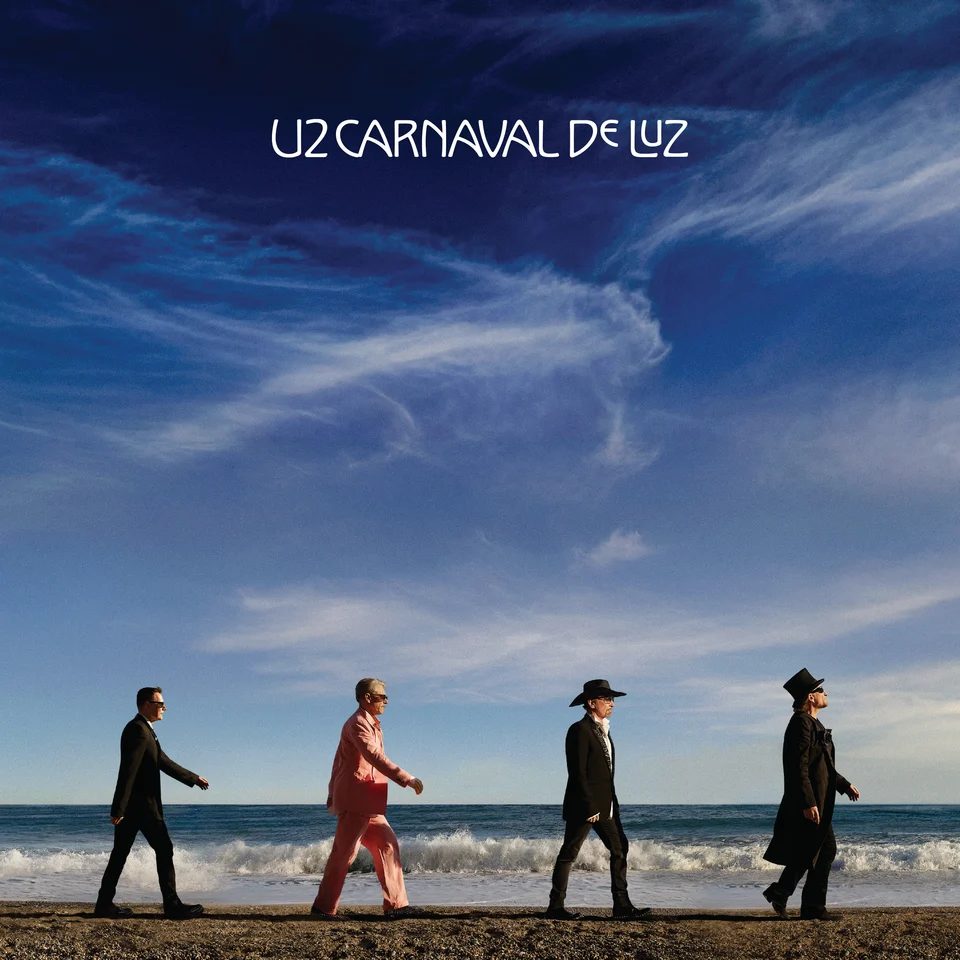
Released: 13 November 2026 · Label: Island (UK/Europe) / Interscope (US), though sources differ · Producer: Jacknife Lee, with contributions from Brian Eno, Steve Lillywhite, Ryan Tedder and Martin Garrix
My copies: the independent record store edition and the Guinness edition on pearl white marble vinyl
Introduction
Carnaval de Luz (“Carnival of Light”) is U2’s 16th studio album and their first album of new songs in nine years, since Songs of Experience (2017). It’s also part of the band’s 50th anniversary celebrations. Its 12 songs follow the Christian liturgical calendar. It completes a sequence that began earlier in 2026 with two EPs, Days of Ash and Easter Lily.
Critics have been unusually warm. Riff gave it 9/10 and compared its spirit to Achtung Baby. The Irish Examiner, publishing a Guardian review, gave it 4/5, calling it “some of the band’s best work in more than 30 years.” ClutchPointscalled it a masterpiece. Ultimate Classic Rock was more measured, describing it as a rebound and a celebration of survival, and its simplest set of songs since No Line on the Horizon (2009).
I first heard it at the preview session at Boiler Room Records the night before release.
Track Listing
1. Go (Carnaval de Luz)
A twitchy, synth-driven opener, built on a pulsing synth riff credited to Brian Eno, with treated guitars and a pounding rhythm. ClutchPoints described it as almost a sci-fi punk song, with Bono singing in a low register reminiscent of “The Fly.” Riff compared its role to “Zoo Station,” the opening track of Achtung Baby. The lyrics announce a break with the past and introduce the album’s “carnival of light.”
2. La Reina
A swaggering, foot-stomping rocker with a big riff and a sexy groove. Several reviewers compared it to “Even Better Than the Real Thing.” Adam Clayton’s bass is a highlight. The Irish Examiner praised its later hymn-like section, in which the vocal recalls Bowie’s “Rock ‘n’ Roll Suicide.” UCR felt it summed up the last twenty years of U2 in four and a half minutes.
3. Street of Dreams
The lead single, released in July. It’s an anthem with a call to action, and its guitars hint at “Where the Streets Have No Name.” Riff found it a grower that works much better in the context of the album than on its own. UCR noted the self-mythologising but said it doesn’t spoil the music.
4. The Mirror Maker (Rosalía)
An exuberant call-and-response song. It opens with a falsetto that recalls “Iris (Hold Me Close),” followed by The Edge’s harmonics and a guitar solo. Its lyrics invite the listener to step “through the mirror.” It’s a tribute to the Catalan singer Rosalía, despite the bracketed name in the title. Hola reported that she doesn’t perform on it. She inspired it.
5. Superficiality
The album’s most divisive track. UCR called it stadium funk, ClutchPoints praised its ringing, early-U2 guitars and lyrics, and the Irish Examiner found it ethereal and rousing, with a high falsetto. Riff thought its staccato delivery and clumsy lyrics made it the album’s one clear misstep.
6. If the World Is at War We Better Not Be
A reflection on faith that opens with Bono’s memory of Mount Temple school in 1976, where U2 formed. The Irish Examiner called it terrific, and ClutchPoints described it as a benediction about light that darkness can’t put out. UCR found it as tangled as its title. It leads straight into “Silencio.”
7. Silencio
The second single, released with the album’s announcement in September. At about 2:35, it’s a short, gritty punk rocker in homage to the band’s early days. Hola reports additional production by Ryan Tedder. Its video was filmed in Mexico City. ClutchPoints called it one of the band’s best rockers, with Clayton’s thumping bass, The Edge’s solos and Larry Mullen Jr. pounding his drums.
8. The Greatest Show on Earth
The album’s centrepiece, according to most reviews. A smouldering verse builds to a huge, stadium-ready chorus, with Eno contributing synths and co-writing. Its theme takes in showbusiness, organised religion, God and love. ClutchPoints called it the best song on the album and an instant classic. Riff called it one of their best songs in years, and the Irish Examiner predicted a “With or Without You”-style live anthem.
9. Glorify
A stripped-back song with piano, choir-like backing vocals and a descending acoustic riff from The Edge. ClutchPoints said it’s the closest U2 have come to a Hozier song. Hola credits Martin Garrix as a co-writer.
10. Midnight Sunshine
A bright, beachy pop song with a piano riff and Edge bar chords, but darker lyrics about heartbreak, anxiety and refusing to give the devil attention. The Irish Examiner called it one of their sweetest, loveliest pop songs.
11. Can’t Stop Us Now
It opens with an Eno soundscape, then moves into a shuffle from Mullen over Clayton’s dub bassline, leading to a massive chorus. ClutchPoints compared it to Zooropa. Riff said it stands alone in U2’s catalogue.
12. Torn (feat. Dolly Parton)
The closer and Dolly Parton’s final recorded vocal performance. It’s a hymn-like country duet, co-written with Parton and Johnny McDaid, with Daniel Lanois on pedal steel. Its lyrics are about a mother’s pain at a family divided. Riff praised Parton’s fragile strength, and ClutchPoints called it a beautiful ballad. UCR felt it didn’t quite live up to its billing.
My Two Editions: The Key Differences
The independent record store edition
- Made with: Third Man Records, Jack White’s label, for independent shops only.
- Packaging: bespoke packaging for independent retailers.
- Colour: published coverage describes the indie edition as yellow vinyl in yellow-and-black packaging. My copy is pink, so it may be a regional or shop-specific variant limited to the UK.
The Guinness edition
- Made with: a one-off collaboration between Island, U2 and Guinness for the band’s 50th anniversary.
- Vinyl: pearl white marble, like the creamy head on a pint.
- Extras: a 16-page booklet with lyrics, photographs and exclusive images, plus a double-sided art print by Bono.
- Where sold: U2.com subscribers could pre-order first. Limited stock was also sold at the Guinness Storehouse in Dublin and the Open Gate Brewery in London on 13 November, and at the Open Gate Brewery in Chicago on 20 November.
| Independent edition | Guinness edition | |
|---|---|---|
| Vinyl | Pink on my copy; published coverage says yellow | Pearl white marble |
| Made with | Third Man Records | Guinness and Island |
| Sold through | Independent record shops | U2.com, Guinness Storehouse and Open Gate breweries |
| Extras | Bespoke indie packaging | 16-page booklet and a double-sided Bono print |
Other editions include a deluxe box with a 180g LP and two 12″ EPs, a deluxe CD box, standard vinyl and CD, retailer exclusives such as JB Hi-Fi’s gold vinyl, Blu-ray and digital.
Final Thoughts
Carnaval de Luz is U2’s strongest album in decades. It’s energetic, synth-flavoured and full of anthems, and it’s the closest they’ve come to the spirit of Achtung Baby. “The Greatest Show on Earth,” “Go,” “La Reina,” “Can’t Stop Us Now” and the Dolly Parton duet “Torn” are the most praised tracks. “Superficiality” and “If the World Is at War” divided reviewers. That said I would say I prefer side two, where you can hear other influences creeping into the track, where side one is almost pure U2 themselves
Between the indie edition, the Guinness edition with its Bono print, and the limited-edition canvas print I won at the Boiler Room preview, it’s become quite a collection.