 Vinyl Review
Why I Clean My Records Before I Play Them
Overview
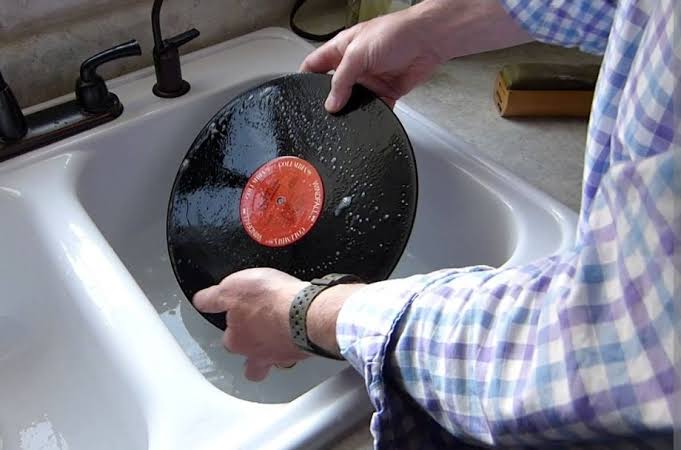
Over the last few posts I've gone through my record cleaning regime one stage at a time. This post steps back and explains why I bother. People sometimes ask whether it's worth all the effort, especially for new records. My answer is yes. I clean every record I own, and here's why.
Why cleaning matters
A stylus sits in the groove and reads every bump in it. Anything sitting in that groove gets read too, whether it's dust, grime, fingerprints or old residue. That's where a lot of the pops and crackle come from. Dirt can also be ground into the groove walls as the stylus passes over it, and it builds up on the stylus itself. Clean records sound better, and they're kinder to the stylus and to the records themselves.
New records aren't clean either
It's easy to assume a record fresh out of the shrink wrap is spotless. In my experience it often isn't. Making a record leaves things behind:
- Pressing residue: the release agents and other bits left over from the pressing process can sit in the grooves
- Dust and fine bits of vinyl: from the pressing and trimming, and from packing
- Paper fibres: from paper inner sleeves, which shed as the record slides in and out
- Static: pulling a record out of its sleeve builds up a charge, and that pulls in more dust
None of this is visible most of the time, but the stylus finds it. That's why new records get cleaned before their first play, the same as everything else.
How I clean mine
My full regime has four stages, with a final step for static:
- SPINCARE cleaning kit and two mats: wash on one mat, then dry wipe on the other
- SPINCARE Record Cleaning Machine: used only as a distilled water rinse, to take off any cleaning fluid left from stage one
- Pro-Ject VC-E2: a vacuum clean that pulls everything out of the grooves and dries the record
- HumminGuru ultrasonic cleaner: the final clean and dry, which adds the last bit of clarity
Used and older records get the whole lot. Very bad ones get the ultrasonic bath, then the vacuum again, then a final ultrasonic clean and dry. New records don't always need the full regime, but they all get cleaned before they're played.
Before any record goes on, I deal with static. These days that's the HumminGuru Orbit, which only needs one cycle on the first side. Before that I used the Milty Zerostat for a long time.
Bringing a poor record back
One of the best things about cleaning properly is that it can rescue a record. I've had poor, noisy records come back to life after a thorough clean, and records I'd nearly written off are now ones I enjoy playing.
It doesn't always work out that way, though. Sometimes the noise is down deep in the groove and no amount of cleaning shifts it. For those records I have a second turntable that's less sensitive to deep groove noise, so I can still enjoy the music instead of giving up on the record.
Verdict
Cleaning isn't a cure-all. It won't fix a scratch or a bad pressing, and some noise is there for good. But it removes the things that shouldn't be in the groove, whether the record is fifty years old or arrived this morning, and it can turn a poor record into a good one. For the time it takes, it's the best thing I do for my records and for how they sound. If you only take one thing from this series, make it this: clean before you play.